




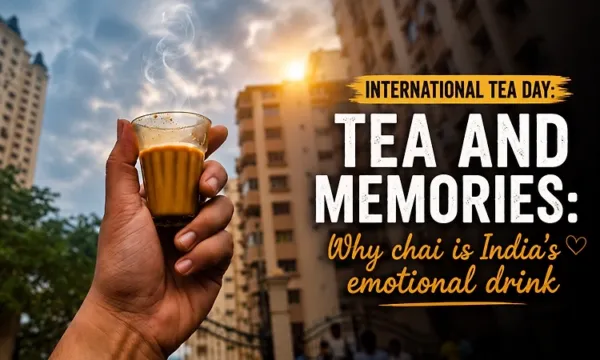

For millions of Indians, tea is not just a beverage. It is a routine, a conversation starter, a stress reliever, and often an emotion attached to memories of family, friendship, travel, and comfort.
From crowded railway stations to quiet village homes, chai continues to remain deeply woven into India's social and cultural fabric. On International Tea Day, the humble cup of tea stands not merely as a drink, but as a symbol of connection and nostalgia.
The day begins with chai
In most Indian households, mornings begin with the aroma of boiling tea leaves mixed with ginger, cardamom, or fresh milk. For many families, the first conversation of the day happens over a cup of chai.
Whether it is newspapers spread across dining tables, parents discussing daily plans, or grandparents sharing stories, tea often becomes the centre of these moments.
In cities, tea accompanies hectic office routines and traffic-filled mornings. In villages, it is a gesture of hospitality offered to every guest who enters a home.
Tea stalls: India's informal social clubs
Roadside tea stalls have long served as gathering spots where people from different walks of life come together.
Students discuss exams, workers take short breaks, friends debate cricket, and strangers engage in conversations about politics and local issues. A small tea stall often becomes a witness to countless stories, friendships, and life-changing discussions.
Across India, the phrase "chai pe charcha" has become a part of everyday vocabulary, reflecting how tea naturally creates spaces for dialogue.
The nostalgia of railway station chai
Few experiences are as emotionally familiar to Indians as sipping hot tea during a train journey.
The sound of vendors calling out "chai, chai" on railway platforms continues to evoke memories of family vacations, long-distance travel, and childhood journeys. Served in paper cups or traditional clay kulhads, railway tea carries a sense of comfort and nostalgia that generations relate to.
For many travellers, the taste of tea during monsoon journeys or winter mornings remains unforgettable.
Hostel nights and office tea breaks
Tea also holds a special place in the lives of students and working professionals.
Late-night study sessions in hostels are often fuelled by repeated cups of tea shared among friends. These tea breaks become moments of laughter, emotional support, and bonding during stressful times.
Similarly, in workplaces, tea breaks offer employees a brief pause from deadlines and meetings. Informal conversations over chai frequently build friendships and workplace connections.
Regional flavours, one shared emotion
India's tea culture varies widely across regions, yet the emotional attachment remains the same.
Mumbai's cutting chai, Kashmir's kahwa, Kerala's strong tea, Kolkata's clay cup tea, and roadside ginger chai in coastal Karnataka all reflect regional identities and traditions.
Despite these differences in preparation and flavour, tea continues to unite people across languages, cultures, and generations.
Social media and modern chai culture
In recent years, tea culture has also found popularity on social media. Videos of unique tea recipes, roadside tea makers, and aesthetic chai photography attract millions of views online.
Tea sellers like Dolly Chaiwala gained nationwide attention after viral videos showcased their distinctive style of serving tea. Such trends have transformed ordinary tea stalls into popular online attractions.
At the same time, modern cafés and tea boutiques are experimenting with fusion flavours and premium experiences, particularly among younger consumers.
More than a beverage
Tea continues to remain one of India's most affordable and accessible drinks. Yet its emotional value goes far beyond its price.
For some, chai reminds them of home. For others, it represents companionship during difficult moments. A simple cup of tea often becomes part of life's celebrations, heartbreaks, journeys, and everyday routines.
On International Tea Day, India's relationship with chai serves as a reminder that sometimes the simplest things create the strongest memories.