




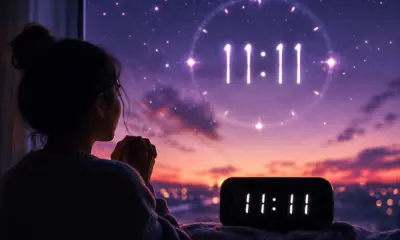

Have you ever looked at your phone exactly at 11:11 and instantly felt the urge to make a wish? Or noticed friends posting screenshots of repeating numbers such as 10:10, 12:12 or 2:22 on social media with captions about "manifestation" or "signs from the universe"?
What once seemed like a random coincidence has now become a global internet phenomenon blending spirituality, psychology, numerology and social media culture. From TikTok videos and Instagram reels to astrology pages and self-help communities, repeating numbers have become deeply connected with ideas of luck, energy, positivity and emotional meaning.
Today, millions of people across the world pause when they see 11:11 on a clock. Some silently make wishes, others share screenshots online, while many simply smile at what they believe is a meaningful sign. But why exactly do people believe in repeating numbers? And do patterns such as 10:10, 12:12, 3:33 or 5:55 carry similar meanings too?
The origin of the 11:11 wish tradition
The popular "11:11 make a wish" trend has existed for decades, but it became much more mainstream during the smartphone and social media era.
According to numerology traditions, the number 11 is often considered a "master number" associated with intuition, awareness and spiritual energy. When repeated as 11:11, believers interpret it as a symbol of alignment, manifestation and inner connection.
Many people who follow spiritual practices believe repeatedly seeing 11:11 is not accidental. Some interpret it as:
- A reminder to focus on positive thoughts
- A sign to stay connected to personal goals and dreams
- A message from the universe or guardian angels
- A symbol of spiritual awakening and self-awareness
The idea became especially popular through online communities discussing "angel numbers," where repeated number patterns are believed to carry symbolic messages.
Over time, 11:11 evolved beyond spirituality and became part of internet culture itself. Today, many people participate casually in the trend even without strongly believing in numerology. For some, it is simply a hopeful and comforting daily ritual.
Do other repeating numbers mean something too?
Yes. In modern numerology and online spiritual culture, many repeating number combinations are believed to represent different emotional or spiritual meanings.
10:10 - Fresh beginnings and optimism
People often associate 10:10 with positivity, confidence and new opportunities. Some numerology followers believe it encourages individuals to trust themselves and move forward with clarity.
12:12 - Alignment and personal growth
The number 12:12 is commonly linked with balance, transformation and progress. Some believe it appears during important life transitions or moments of emotional growth.
2:22 or 222 - Relationships and trust
This sequence is usually associated with patience, emotional balance and relationships. Social media users often describe 222 as a sign to trust the process during difficult situations.
3:33 or 333 - Creativity and encouragement
In spiritual discussions, 333 is often connected with creativity, self-expression and motivation. Some people view it as a sign of emotional support or encouragement.
4:44 or 444 - Stability and protection
Many numerology believers associate 444 with grounding, safety and emotional reassurance. It is often interpreted as a symbol of stability during uncertain times.
5:55 or 555 - Major life changes
The number 555 is widely viewed as a sign of transformation, sudden change or important decisions ahead. Many believe it appears during periods of transition in life.
Why do people feel emotionally connected to these numbers?
Psychologists say there may be a scientific explanation behind the fascination with repeating numbers.
Humans naturally search for patterns in daily life, a process known as "pattern recognition." The brain tends to assign meaning to repeated events, symbols or sequences, especially when they stand out emotionally.
Experts also point to a psychological concept called "confirmation bias." This means people often notice and remember things they already believe are important while ignoring unrelated information. For example, once someone starts believing 11:11 is meaningful, they may begin noticing it more frequently.
Researchers also say symbolic rituals can provide emotional comfort during uncertain or stressful periods. In a fast-moving digital world, small moments like seeing repeating numbers may offer reassurance, positivity or a sense of connection.
Social media's role in making 11:11 a global trend
Platforms such as TikTok, Instagram and YouTube have played a major role in turning repeating numbers into a worldwide internet obsession.
Millions of users regularly post:
- "11:11 make a wish" stories
- Manifestation videos
- Astrology and numerology content
- Spiritual advice reels
- Coincidence experiences involving repeating numbers
Influencers focusing on mindfulness, healing and spirituality often describe repeating numbers as signs of positivity and self-awareness. This has helped the trend move far beyond traditional numerology communities and into mainstream youth culture.
Even people who do not strongly believe in angel numbers often join the trend simply because it feels fun, emotional or hopeful.
Belief, coincidence, or modern internet ritual?
There is no scientific evidence proving that repeating numbers can predict the future or change outcomes. However, the emotional and cultural connection many people feel toward these numbers continues to grow.
For some, 11:11 is deeply spiritual. For others, it is simply an entertaining internet trend or a small moment of positivity during the day.
Whether viewed through spirituality, psychology, or social media culture, repeating numbers such as 11:11, 10:10, and 12:12 have become one of the internet's most fascinating modern rituals-blending belief, emotion, and digital culture in a way that continues to capture global attention.
How to make an 11:11 wish
Many people who follow the 11:11 trend believe it is a meaningful moment to focus on positive thoughts, dreams, or intentions. While there is no scientific proof that wishes made at 11:11 come true, the ritual has become a popular emotional and spiritual practice online.
Here's how people commonly make an 11:11 wish:
Pause when the clock shows 11:11
Many people stop for a few seconds when they notice the time and treat it as a special moment.
Focus quietly on your wish
Some close their eyes, stay calm, and think deeply about a dream, goal, or hope.
Think positively
Believers often say the wish should come from a positive mindset connected with happiness, success, or self-growth.
Visualise the wish
Manifestation followers suggest imagining the wish as if it has already happened-whether it is success, love, peace, or personal achievement.
Keep it personal
Some internet traditions claim that not sharing the wish immediately makes it feel more meaningful, though this is purely symbolic.
Use it as motivation
For many people, the ritual is less about magic and more about mindfulness-a reminder to stay hopeful, focused, and optimistic in daily life.
Today, social media users continue to turn 11:11 into a shared internet ritual by posting screenshots, sending wishes to friends, and using the moment as a small pause for positivity in a busy digital world.