
Beauty standards vary widely across cultures. In many places, what is considered attractive may appear unusual or surprising to outsiders.
These standards often develop from cultural traditions, social beliefs, or historical practices. Some examples from different countries are listed below.
Long necks in Myanmar (Kayan tribe)
Among the Kayan community in Myanmar, women traditionally wear brass neck rings from a young age. Over time, additional rings are added, giving the appearance of a long neck. In this community, a longer-looking neck is considered a sign of beauty and cultural identity.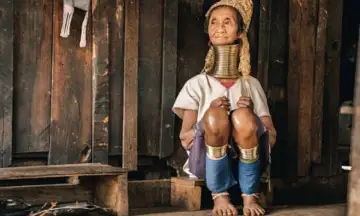 Lip plates in Ethiopia
In some tribes in Ethiopia, such as the Mursi community, women wear large clay or wooden plates in their lower lip. The lip is gradually stretched over time. Larger lip plates are often associated with beauty, maturity, and social status within the community.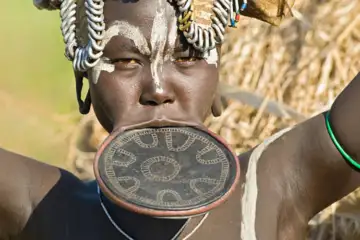 Unibrow in Tajikistan
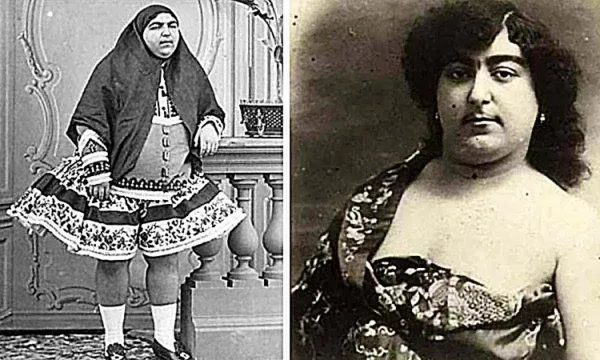
In Tajikistan, a connected eyebrow, or unibrow, is traditionally seen as a symbol of beauty and good luck. Some women even draw a line between their eyebrows to create the appearance of a unibrow if they do not naturally have one.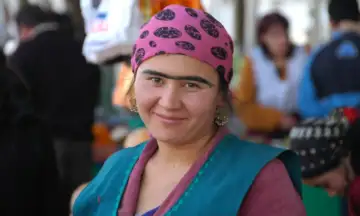
Tooth blackening in Japan (historical practice)
In historical Japan, especially during the Edo period, married women and some members of the aristocracy practised Ohaguro, a custom of dyeing their teeth black. Blackened teeth were considered a sign of beauty, maturity, and loyalty to one's spouse.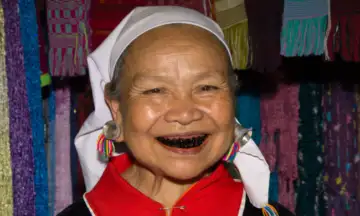
Face scarification in some African communities
In certain African cultures, decorative scars are created on the face or body through controlled cuts. These scars are considered marks of beauty, bravery, or belonging to a specific tribe.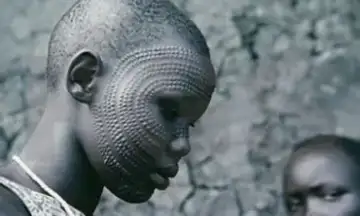
Foot binding in ancient China
For centuries in China, young girls from wealthy families underwent foot binding, a practice in which the feet were tightly wrapped to keep them very small. Small feet were considered a symbol of elegance and beauty. The practice was later banned in the early 20th century.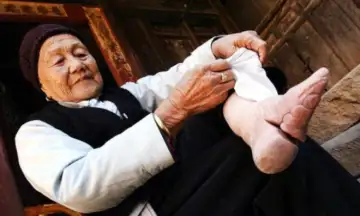 Body fattening in Mauritania
In some areas of Mauritania, a fuller body has historically been viewed as a sign of beauty and wealth. In the past, some families encouraged girls to eat large amounts of food to gain weight, believing it increased marriage prospects.
Crooked teeth trend in Japan
In modern Japan, a cosmetic trend called yaeba values slightly crooked or protruding canine teeth. Some people even undergo dental procedures to create this look because it is seen as cute or youthful.
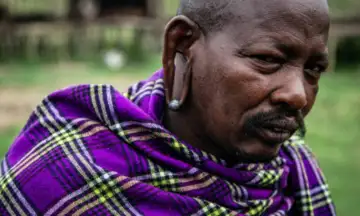
Stretching ear lobes in Kenya and other regions
In certain African communities, including the Maasai people of Kenya, individuals stretch their earlobes using ornaments or weights. Larger ear openings are often associated with beauty and cultural tradition.