


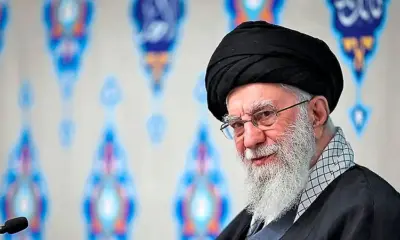

Tehran: Iran is preparing for the state funeral of former Supreme Leader Ayatollah Ali Khamenei, who was killed in US-Israeli strikes on February 28. Authorities expect the ceremony to be one of the largest in the country's history, with millions of mourners and several foreign dignitaries expected to attend.
Khamenei's remains arrived in Tehran ahead of ceremonies scheduled across at least five cities in Iran and Iraq, beginning on Friday. The main funeral is set to take place on Saturday.
Images published by Iranian media showed mourners carrying Khamenei's coffin, draped in the Iranian national flag, into Tehran's Grand Mosalla, one of the country's most prominent ceremonial venues. Thousands of people dressed in black gathered for pre-funeral prayers as the coffin was placed before floral decorations and symbolic displays.
Funeral ceremonies across Iran and Iraq
The public funeral, which was postponed during the conflict, will begin in Tehran before moving to the holy cities of Qom and Mashhad in Iran, followed by ceremonies in Iraq.
Khamenei's body will remain at the Grand Mosalla for three days before being taken to the Iraqi cities of Najaf and Karbala. He is scheduled to be buried on July 9 at the shrine of Imam Reza in Mashhad, his birthplace.
The bodies of several members of his family who were killed during the conflict will also be honoured during the ceremonies.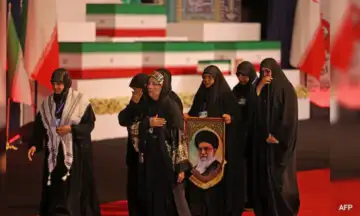
International representatives to attend
Pakistan has confirmed that Prime Minister Shehbaz Sharif will attend the funeral.
India will be represented by Bihar Governor Syed Ata Hasnain and Minister of State for External Affairs Pabitra Margherita.
Representatives from China, Afghanistan and several neighbouring countries in the Caucasus region are also expected to participate.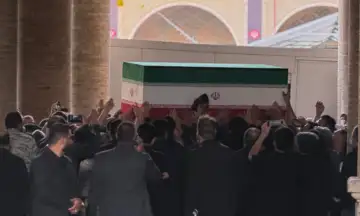
Funeral seen as demonstration of public support
Iranian leaders have described the funeral as more than a religious ceremony, presenting it as a display of support for the Islamic Republic following the recent conflict.
Qom Friday prayer leader Ayatollah Mohammad Saidi said the expected public participation would serve as "another referendum for the Islamic Republic."
Authorities reportedly hope to mobilise between 15 million and 20 million people by arranging transportation, accommodation and food for participants.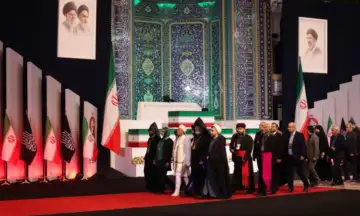
Leadership transition
Khamenei died at the age of 86 during strikes on his compound in central Tehran.
Following his death, his son Mojtaba Khamenei became Iran's third Supreme Leader. Reports indicate that Mojtaba, who was seriously injured in the same attack, has not appeared in public since the conflict began and is not expected to attend his father's funeral due to security concerns.
Mixed public sentiment
While the government is projecting the funeral as a symbol of national unity, analysts say public opinion within Iran remains divided.
The country has experienced years of economic hardship, international sanctions and anti-government protests. Demonstrations in recent months saw protesters criticise the country's leadership, while authorities responded with security crackdowns.
Following reports of Khamenei's death earlier this year, some residents in parts of Tehran reportedly celebrated, highlighting differing public reactions.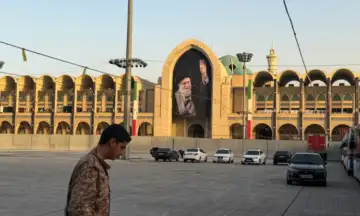
Khamenei's religious and political influence
Besides serving as Iran's Supreme Leader, Khamenei was regarded as an influential Shiite cleric with followers in countries including Iraq, Pakistan and Lebanon.
He held the rank of Marja, making his religious rulings influential among many Shiite Muslims. Although Iraq's Grand Ayatollah Ali Sistani is widely regarded as one of Shiite Islam's leading religious authorities, Khamenei exercised significant political influence through Iran's alliances with regional Shiite groups and his leadership of the Islamic Revolutionary Guard Corps (IRGC).
Government urges nationwide participation
Iranian Parliament Speaker Mohammad Bagher Ghalibaf called on citizens to participate in large numbers, saying their presence would send a message to the international community.
President Masoud Pezeshkian also appealed to people from all communities and political backgrounds to attend, describing the funeral as a demonstration of national unity and solidarity.
Why the funeral was delayed
The burial is taking place more than four months after Khamenei's death, an uncommon delay under Islamic tradition, which generally encourages prompt burial.
Iranian officials said the funeral was postponed because of ongoing military operations and security concerns during the conflict with the United States and Israel.
Officials have denied reports that Khamenei was temporarily buried, stating that his body was preserved according to Islamic religious requirements.
Counterterrorism expert Dr Mohammed Omar told Fox News Digital that the remains were most likely kept in refrigerated storage rather than chemically embalmed, noting that Islamic law permits delayed burial in exceptional circumstances.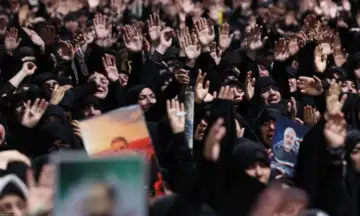
Symbol of resistance
The Iranian government has adopted the slogan "We must rise" as the official message of the funeral, presenting the event as a symbol of resilience following the conflict.
The atmosphere in Tehran, however, has been noticeably quieter than during the funeral of Ayatollah Ruhollah Khomeini in 1989, when millions of mourners flooded the streets during one of the largest funeral processions in modern history.