


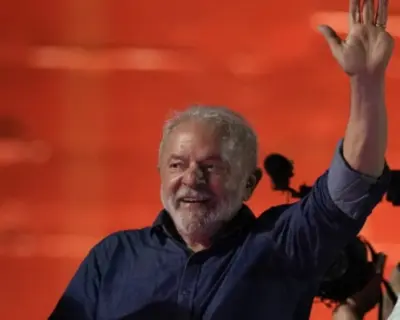

Brazilian leftist President Luiz Inacio Lula da Silva has won a fourth term in office, defeating right-wing challenger Flávio Bolsonaro in a presidential runoff, electoral authorities said.
Lula overcame his first-round defeat to Bolsonaro to secure victory in the runoff. The nearly 81-year-old leader won 51.7% of the vote, compared with 48.2% for Flavio Bolsonaro, the son of former president Jair Bolsonaro.
The campaign was marred by scandals and mudslinging. Sunday's vote was thrown into confusion after a last-minute Supreme Court ruling extended voting by two hours, following Lula's claim that buses had been taken off the roads in several cities, preventing some voters from reaching polling stations.
Pollsters said higher-than-expected turnout appeared to have benefited Lula. Conservative candidates in Brazil typically lead early in the count, while left-wing candidates gain ground as votes from poorer, more populous northeastern states come in.
In regards to foreign policy in his next term, Lula will have to manage relations with Washington while maintaining his anti-imperialist stance, as the Trump administration increasingly asserts its influence across the region. Flavio Bolsonaro had campaigned on a promise of closer cooperation with Washington.
Around 159 million Brazilians were eligible to vote. Under Lula's left-wing Workers' Party, unemployment fell to a record low, poverty declined, the minimum wage rose and deforestation in the Amazon decreased. Congress also approved the gradual introduction of a five-day working week with two days off.
However, rising living costs, high public debt, Lula's spending policies and a scandal involving alleged pension fraud weighed on his government. The economic challenges left many voters dissatisfied with his record and open to a return of the Bolsonaro family to power.
Lula finished the first round with 45% of the vote, two percentage points behind Flavio Bolsonaro. He became the first candidate since Brazil restored direct presidential elections in 1989 to overcome a first-round deficit and win the runoff.
The former trade unionist, who served as president from 2003 to 2010 before returning to office in 2023, now faces a challenging fourth term with a strong right-wing opposition.
Lula says Brazilians voted to defend democracy, vows to resist US influence
Brazilians voted to "guarantee democracy," President Luiz Inacio Lula da Silva said Sunday after beating Flavio Bolsonaro to win an unprecedented fourth term.
In a post on X, Lula thanked Brazilians, particularly young people who took to the streets in defense of democracy, saying: "This victory belongs to a people who believe, who fight, and who never give up on building a more just, sovereign, and democratic Brazil."
In his victory speech, Lula reiterated that Brazil would "not accept being anyone's backyard," a recurring campaign message defending the country's sovereignty against US influence. The stance may have helped him win votes, with some voters viewing Washington's actions as interference.
Relations between the two countries deteriorated in 2025, when the US imposed tariffs on Brazil in retaliation for legal proceedings against former president Jair Bolsonaro, who was later convicted of coup-plotting.
Speaking in a hoarse voice, Lula thanked his campaign team and Brazilians, particularly young people who took to the streets to defend democracy. He described the result as a "loss for negativity, lies."
The re-elected president also promised better regulation of big tech platforms, after Meta was the subject of legal complaints over alleged "interference" throughout the polarizing campaign.
Flavio Bolsonaro rejects defeat, seeks annulment of Brazil election
Right-wing presidential candidate Flavio Bolsonaro has rejected his defeat to incumbent Luiz Inacio Lula da Silva in Brazil's presidential run-off, calling for the election to be annulled over a two-hour extension of voting hours.
Speaking to reporters after the electoral court declared Lula the winner, Bolsonaro said he could not accept the result. He criticized a decision by Supreme Court judge Cristiano Zanin to extend voting hours nationwide, arguing that it had changed the rules of the election.
"What happened today was not normal. It was unacceptable," Bolsonaro said, arguing that the nationwide extension had undermined equal treatment between states. He said he would take legal action against the result.
Lula's campaign had requested the extension, citing difficulties transporting voters to polling stations in several states. Bolsonaro's campaign had also sought extra voting time, but only in municipalities across five states, citing heavy rain, flooding and power outages.