
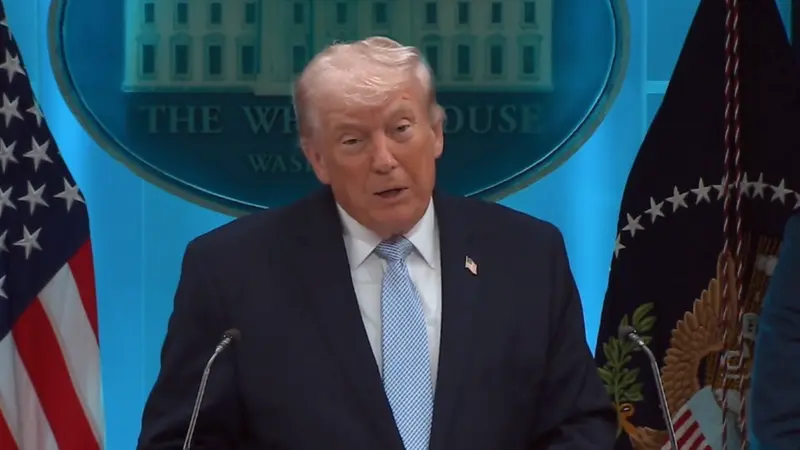

The language used by U.S. President Donald Trump during the recent Iran conflict raised major eyebrows internationally. His threats to reopen the Strait of Hormuz went beyond conventional rhetoric, and he even hinted at erasing Iranian civilization.
While this aggressive tone drew widespread criticism, reports now suggest it was part of a deliberate U.S. strategy known as the 'Madman Theory.'
Origins of the Madman Theory
The Madman Theory is closely associated with former U.S. President Richard Nixon. During the Vietnam War, Nixon wanted his enemies to believe that he could go to any extreme—even using nuclear weapons—if necessary. In conversations with his top aide, White House Chief of Staff Bob Haldeman, Nixon discussed sending a message that he was 'mad' and unpredictable, to instill fear and uncertainty in adversaries. The strategy aimed to force opponents into concessions by creating the impression that Nixon could act irrationally and without restraint.
'I call it the Madman Theory, Bob," Nixon said. 'I want the North Vietnamese to believe I've reached the point where I might do anything to stop the war." The broader idea, as later recounted, was to make the other side think he was so obsessed, so angry, and so close to the nuclear button that they would be frightened into yielding.
This psychological tactic became a key part of U.S. diplomacy, aiming to leverage perceived unpredictability for strategic advantage.
What Is Madman Theory?
In international politics, the Madman Theory involves a leader presenting themselves as unstable, angry, or unpredictable. The objective is to convince opponents that they might go to any length—even nuclear war—forcing the other side to compromise out of fear. The logic is simple: if adversaries see you as rational, they can predict your moves; if they see you as 'mad,' every threat seems real.
Trump's Approach in Iran Conflict
During the Iran crisis, Trump appeared to employ a similar strategy. On February 28, the U.S. and Israel launched a major strike against Iran, killing Iranian Supreme Leader Ali Khamenei, escalating tensions across West Asia. Following this, Trump's statements oscillated sharply—ranging from threatening to send the country 'back to the Stone Age' and destroy Iranian civilization to quickly agreeing to a ceasefire just hours later.
On social media, Trump alternated between aggressive threats against Iranian power plants and bridges and offers for negotiation, cultivating an image of an unpredictable and volatile leader—a hallmark of the Madman Theory. Analysts also liken this to a 'good cop, bad cop' approach, in which Trump deliberately presented himself as volatile to increase pressure on Iran.
By blending threats with sudden conciliatory gestures, Trump aimed to confuse opponents and maximize leverage, much like Nixon did in the 1970s, as revealed in the conversations with Haldeman during the Vietnam War.