
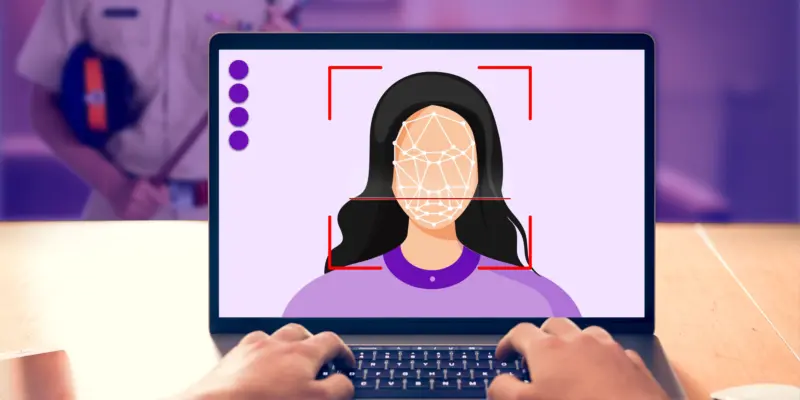

Trust was once the foundation for all digital transactions. Now, this narrative is challenged by the growing vulnerability of cybersecurity.
What seemed like a regular work call with office seniors and colleagues led a finance executive to approve a multi-million-dollar transaction. The faces were familiar, the voices authoritative, and the context credible. None of it was real. Every participant in the meeting was generated by artificial intelligence.
This isn't a hypothetical incident. It is a real-world deepfake-enabled fraud case in which a company lost over $25 million in a single transaction.
What was once experimental technology has become a powerful weapon in cybercrime. Deepfakes, impersonation, and AI-driven manipulation are redefining the threat landscape and forcing cybersecurity to evolve rapidly.
Industrialisation of deception
Cybercrime has always relied on deception, but AI has scaled its reach and precision. Today, attackers no longer need advanced technical skills. "Deepfake-as-a-service platforms have made tools for voice cloning, video manipulation, and identity simulation widely accessible. The impact is measurable. Deepfake files surged from 500K in 2023 to over 8 million in 2025, while fraud attempts linked to such technologies have grown exponentially.
For instance, US financial fraud losses rose to $12.5 billion in 2025, with AI-assisted attacks significantly contributing to the increase. Similarly, in India, cybercriminals leveraged fake identities to impersonate executives in phishing campaigns, tricking employees into transferring sensitive information. These incidents mark the industrialisation of deception, in which AI automates the exploitation of trust at scale.
Impersonation as a primary attack vector
AI-integrated impersonation has become one of the most effective and scalable cyberattack methods. Unlike traditional phishing, these attacks replicate real individuals with high precision, mimicking their voices, appearances, and communication patterns to evade suspicion.
The risk lies in the level of personalisation and realism. Attackers can pose as senior executives, colleagues, family members, or authorities, embedding themselves into trusted communication channels. Advancements in generative AI have lowered the barrier to entry. With minimal publicly available data, attackers can create highly accurate synthetic identities capable of influencing decisions and triggering actions.
This threat is reflected in recent statistics showing that 46% of fraud experts have encountered synthetic identity fraud cases, 37% have encountered voice deepfake cases, and 29% have encountered video deepfake cases.
In India alone, nearly 47% of adults have experienced or are aware of AI-driven scams. Hence, the attack is no longer just about emails and links; it is now extending to human beings.
Why these attacks work
Here are key points that make cyber-attacks effective:
- Exploitationofcognitivebias: Attackers use urgency, authority, and familiarity to bypass rational decision-making. Requests from senior leaders, authorities, or regular contacts trigger immediate action without proper verification.
- Hyper-realistic deception: AI-generated videos can closely replicate human behaviour, making detection difficult. Studies show that humans can correctly identify high-quality deepfakes only about 24.5% of the time.
- Gapsinidentityverificationframeworks: Traditional authentication methods like passwords, OTPs, and video verification were not designed to counter synthetic identity attacks. This creates vulnerabilities at the point of trust validation.
- Executionspeedandresponsetime: AI-powered attacks operate in real time, often executing within minutes. Meanwhile, verification processes remain manual or fragmented, allowing attackers to exploit.
Bridging the gap
Legacy security frameworks were designed to secure systems like networks, endpoints, and data. However, identity and trust are more complex to secure. Legacy security systems such as passwords, one-time passwords, and video authentication are no longer effective against deepfake attacks because attackers can masquerade as real users.
AI-powered attacks occur faster than users can verify transactions in real time. Fraud happens in minutes and cannot be checked manually. This has created a fundamental mismatch between threat evolution and security system design.
To address this gap, the solution is to shift from identity-based trust to intent-based verification. This means moving beyond surface-level identity checks to multi-layered validation frameworks that use behavioral biometrics, device intelligence, and contextual signals. Another key factor is implementing AI-based detection systems that identify anomalies in voice, video, and behavior.
Process-level controls must also be strengthened, ensuring that critical actions like financial approvals require multi-person authentication and independent verification channels, no matter how authentic a request appears. The final key factor is people. Humans must be aware of AI-based manipulation and follow strict verification processes.
Rebuilding trust in a synthetic world
The emergence of deepfakes and AI-related manipulation is a crisis of trust. Digital interactions that were once trustworthy are now uncertain.
The distinction between real and artificial will become increasingly blurred as AI technology advances. Organisations that thrive will not be those using more technology, but those that redesign trust. Cyber defence is now about protecting reality.
To stay ahead of these evolving threats, organisations must focus on future-proofing their security strategies. This includes fostering a culture of continuous training to keep staff aware of the latest manipulation techniques, regularly updating security frameworks to adapt to emerging risks, and implementing systems that are flexible and enable rapid response.
By prioritising ongoing education, investing in adaptive technologies, and encouraging proactive defense planning, businesses can strengthen their resilience as the threat landscape continues to shift.
(Pavan Kushwaha is the Founder & CEO at Threatcop & Kratikal)
(Disclaimer: The views and opinions expressed in this article are those of the author and do not necessarily reflect the views of YourStory.)