
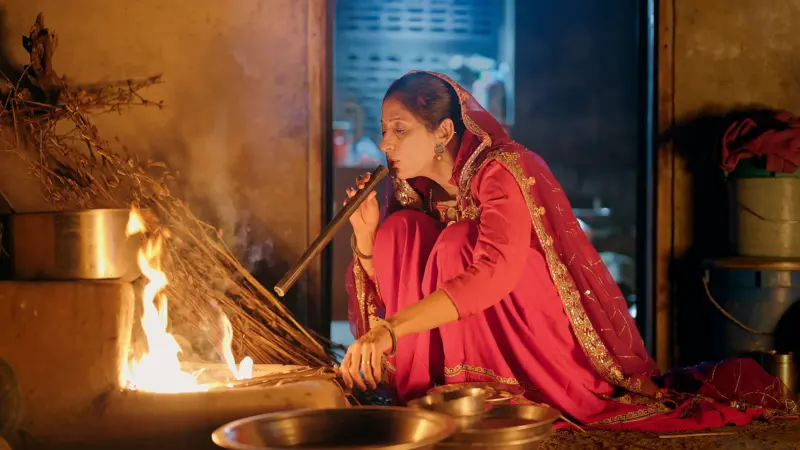

The Economic Survey 2025-26, tabled in Parliament on Thursday, has drawn attention to the unequal distribution of paid and unpaid work in India, highlighting the dual burden borne by women and its implications for their participation in the labour force.
Drawing on findings from the Time Use Survey (TUS) conducted by the Ministry of Statistics and Programme Implementation (MoSPI), the survey noted that women continue to shoulder a disproportionate share of caregiving and unpaid domestic responsibilities, factors that shape both their availability for paid work and their preference for flexible employment models.
According to the survey, women remain the primary caregivers within households. About 41% of women aged 15-59 years reported participating in caregiving activities for household members, compared to 21.4% of men in the same age group. On average, women spent nearly 140 minutes a day on caregiving, almost double the 74 minutes spent by men.
The data revealed the stark gender differences in the allocation of time between paid and unpaid activities. While the average time spent on unpaid activities by all individuals aged six years and older was 278 minutes per day, for paid activities, it was 386 minutes per day.
It highlighted that women spent an average of 363 minutes a day on unpaid work, nearly three times the 123 minutes recorded for men. In contrast, men spent significantly more time on paid work-414 minutes a day for paid work compared to 302 minutes for women.
As a result, the combined time women spend on paid and unpaid activities exceeds that of men. Although women participate in paid employment, their overall participation rates remain lower, partly due to the heavier load of unpaid responsibilities.
The Economic Survey noted that these findings reinforce earlier observations about the care sector's potential to boost the female labour force participation rate (FLFPR). It reinforces policy recommendations made in recent years, including the need for flexible work arrangements, expanded childcare and crèche facilities, skill development programmes aligned with industry needs, and a long-term strategy focused on women and girls.
Over the past year, many states have taken steps to ease regulatory constraints on women's employment. These include the removal of prohibitions on women working in designated 'hazardous' industries by 17 states and Union Territories, and permission for night-time work for women in factories across about 22 states and UTs. Around 33 states and UTs now allow women to work night shifts in commercial establishments, measures aimed at improving labour market flexibility and expanding employment opportunities.
The survey also points to the nature of women's employment, particularly in rural areas. In Q2 FY26, only 10.8% of rural women were engaged in regular wage employment. A significant proportion were self-employed, working as own-account workers or employers (37.5%), or contributing as helpers in household enterprises (34.2%).
"These patterns highlight a tendency among female workers towards independent work and entrepreneurship, which offers flexibility," the survey said.
Edited by Megha Reddy