
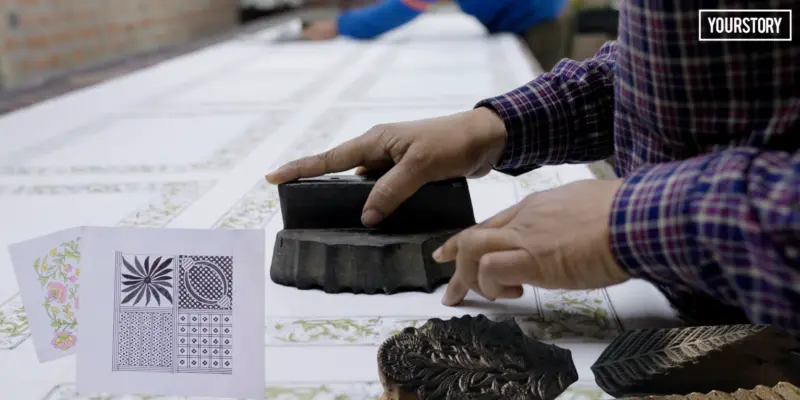

In Uttar Pradesh's Farrukhabad district, textile printing is shaped by a long-standing craft tradition where the tools of the trade are as important as the fabric itself.
The district is widely known for Vastra Chhapai (textile block printing)-the notified product under the One District One Product (ODOP) programme-where hand-carved wooden blocks play a central role in bringing intricate designs to life on fabric.
Farrukhabad's identity in textile printing extends beyond printed cloth; it is equally rooted in the craftsmanship of the wooden printing blocks used by printers across India. These blocks, carved with precision and patience, serve as the foundation of the printing process. When a well-made block maintains its sharpness and durability, printers are able to deliver consistent designs, leading to repeat orders and sustained demand.
The ecosystem functions through multiple interconnected stages rather than a single workshop operation. Timber is sourced and seasoned, designs are marked, blocks are carved and finished, and fabrics are printed and dispatched to markets. Each stage involves specialised skills, creating a collaborative production chain that sustains the local industry.
Through the Government of Uttar Pradesh's ODOP programme, the Farrukhabad textile printing cluster has gained greater visibility and policy support. Local entrepreneurs highlight that access to loans, subsidies, and opportunities to participate in exhibitions has helped them expand their work and connect with wider markets.
Among the artisans continuing this tradition is Ajay Singh Chauhan, a craftsman from Bhikampur village in Farrukhabad. For Chauhan, block-making is a family legacy inherited from his grandfather and father. While the family's work initially centred on supplying carved blocks to printers, they gradually expanded into textile printing and decorative carved blocks for contemporary uses.
For Chauhan, the process begins with selecting seasoned timber. The wood is stored for extended drying before carving begins. It is then cut and smoothed, after which design outlines are drawn on the surface. Skilled hands carve the intricate motifs into the wood, transforming the block into a printing tool before handles are attached and finishing touches are applied.
"Without block-making, even thinking about block printing is pointless," Chauhan explains, highlighting how the entire printing trade depends on the availability of well-crafted blocks.
Blocks produced in Farrukhabad travel far beyond the district, reaching printing centres in cities such as Jaipur, Delhi, and parts of Gujarat. At Chauhan's unit, printing assignments also largely come through buyers connected to markets in Delhi and Jaipur. Social media platforms have helped artisans discover new clients, though international buyers are often reached indirectly through larger trade hubs.
Two operational factors remain crucial for sustaining output quality. First, the careful selection and seasoning of timber determines the durability and precision of the finished block. Second, proper packing and dispatch are essential-especially for customised carved blocks-since their value lies in reaching buyers intact and meeting exact specifications.
In Farrukhabad's textile printing ecosystem, the journey of the wooden block is as significant as the printed cloth itself. When timber preparation, carving accuracy, and market linkages work together, the district's craft tradition continues to thrive through steady orders and enduring demand.