


Hello,
Artificial intelligence continues to reshape global technology markets, influencing valuations, business strategies, and even corporate structures.
Samsung Electronics shares surged more than 15% on Wednesday, pushing the company's market capitalisation past the $1 trillion mark as investors continued to pile into AI-linked stocks. The move makes Samsung only the second Asian company, after TSMC, to cross the milestone.
The ongoing expansion of AI infrastructure was further highlighted by Nvidia, which remains at the center of the industry's expansion. The chipmaker is partnering with Corning to develop three advanced manufacturing facilities in North Carolina and Texas for optical technologies. These components are essential for scaling high-performance AI systems, signaling Nvidia's continued push to secure critical infrastructure for next-generation computing demand.
Meanwhile, SaaS company Freshworks said it will cut its workforce by 11%, largely due to the growing influence of AI, even as it reported a 16% increase in revenue for the first quarter of 2026. The company said the decision reflects productivity gains from AI adoption, with CEO Dennis Woodside noting that more than half of its code is now written by AI systems.
In other news, SpaceX has adopted corporate governance policies that will erode typical shareholder protections in unprecedented ways, giving founder Elon Musk virtually unchecked executive authority when the rocket maker goes public later this year.
In today's newsletter, we will talk about
- Lisa Ray on menopause and women's health
- Proshort turns AI into real-time sales coach
Here's your trivia for today: What is Google's Android mascot unofficially known as?
Women's Health
When actor Lisa Ray went public with her cancer diagnosis, she didn't speak about another life-altering aftermath-treatment-induced menopause. Years later, she's breaking that silence, challenging stigma, and building solutions to reshape how women understand and experience midlife health.
Holistic Care:
- Ray's stem cell transplant pushed her into early menopause, but with little guidance or support. Like many women, she navigated symptoms and confusion largely on her own, exposing a major gap in awareness and care.
- Conversations with other women revealed how widespread the lack of knowledge is around perimenopause and menopause. By speaking openly, Ray has helped normalise these experiences and push for informed, science-backed care.
- Through NuHer, a midlife health clinic that provides expert, integrated care for women navigating perimenopause and menopause, Ray is working to create a holistic, patient-centric model, combining medical, hormonal, and emotional support, while urging women to advocate for themselves and seek better care when dismissed.
In-focus
Design: Nihar Apte
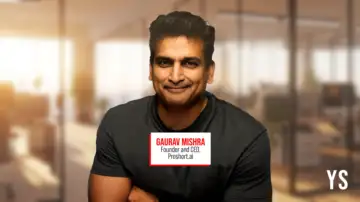
Gaurav Mishra, founder of early Indian search engine Guruji, returned to entrepreneurship in 2022 with Proshort, an AI-powered sales coaching platform. Drawing on decades of experience at companies like Microsoft, Meta, and Uber, he is now focused on using generative AI to solve a long-standing gap in how sales teams learn, perform, and improve in real time.
Key takeaways:
- Mishra's journey spans early internet India to global tech leadership roles, before returning to startups to build Proshort, an AI-native "super coach" for sales teams.
- Proshort uses generative AI to analyse sales conversations and workflows in real time, giving actionable feedback that improves win rates and reduces administrative workload for sales reps.
- With customers in India, the US, and Europe, Proshort is scaling as a lean, AI-native SaaS platform using multiple foundation models, with future plans to evolve pricing and expand globally.
Funding
Startup: Ecofy
Amount: $15M
Round: Undisclosed
Startup: BigEndian
Amount: $6M
Round: pre-Series A
News & updates
- Oil prices: Oil prices have dropped and global stock markets have risen following reports that the US and Iran are close to a deal to end the war.
- Renewable Energy: Microsoft is considering delaying or dropping its 2030 goal to match all hourly electricity use with renewable energy purchases, Bloomberg reported. The shift reflects how AI-driven data center expansion is challenging its earlier climate commitments.