
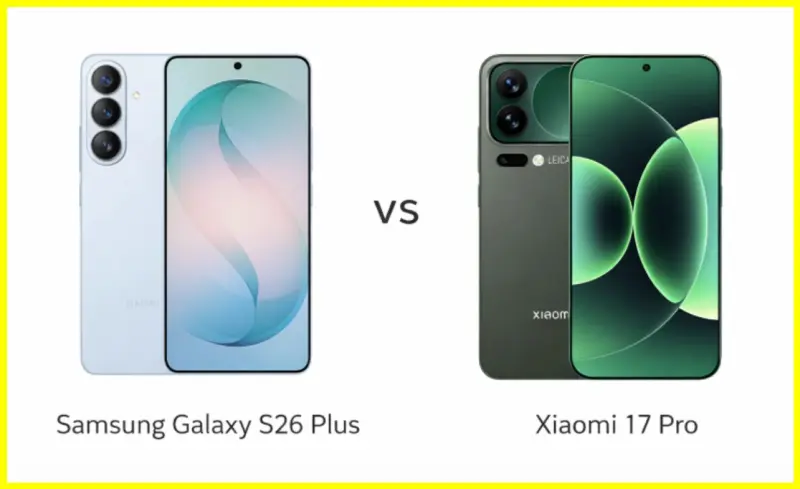

Mumbai, April 4: In 2026, flagship smartphones are not just about premium branding; they focus on the value and innovation offered for the price.
The Samsung Galaxy S26+ and Xiaomi 17 Pro adopt distinct approaches: one emphasizes refinement, long-term reliability, and ecosystem strength, while the other offers aggressive hardware upgrades at a significantly lower price. This comparison helps buyers decide between a safe premium experience and a feature-rich powerhouse, highlighting the strengths of each device based on user priorities.
Major Features:
| Feature | Samsung Galaxy S26+ | Xiaomi 17 Pro | Winner |
|---|---|---|---|
| Display | 6.7" LTPO AMOLED, 1440p, 120Hz, 2600 nits | 6.3" LTPO AMOLED, 1220p, 120Hz, 3500 nits + rear display | Xiaomi - brighter + secondary display |
| Build | Gorilla Glass Victus 2, Armor Aluminum 2, IP68 | Dragon Crystal Glass, Aluminum, IP68 (4m) | Samsung - more proven durability |
| Chipset | Snapdragon 8 Elite Gen 5 / Exynos 2600 | Snapdragon 8 Elite Gen 5 | Tie - same flagship chip |
| RAM & Storage | 12GB RAM, up to 512GB, UFS 4.X | Up to 16GB RAM, 1TB, UFS 4.1 | Xiaomi - more powerful configs |
| Rear Camera | 50MP + 10MP (3x) + 12MP UW | 50MP + 50MP (5x periscope) + 50MP UW | Xiaomi - better zoom + sensors |
| Selfie Camera | 12MP | 50MP | Xiaomi - higher resolution |
| Video | 8K, HDR10+ | 8K HDR, Dolby Vision, LOG | Xiaomi - more advanced video |
| Battery | 4900 mAh | 6300 mAh | Xiaomi - significantly bigger |
| Charging | 45W wired, 20W wireless | 100W wired, 50W wireless | Xiaomi - much faster |
| Software | Android 16, 7 years updates (One UI) | Android 16, HyperOS 3 | Samsung - longer support |
| Extras | DeX, Wireless DeX, UWB | Rear display, IR blaster, UWB | Tie - different advantages |
| Price | $1100 / ₹120,000 | $700 / ₹62,000 | Xiaomi - far better value |
Design and Display
Build and Feel
The Samsung Galaxy S26+ features a refined flagship design with Gorilla Glass Victus 2 and an Armor Aluminum 2 frame, offering a polished and durable feel. It also provides broader SIM flexibility and DeX support, enhancing productivity. In contrast, the Xiaomi 17 Pro adopts a more experimental design with Dragon Crystal Glass and a secondary rear display, making it visually striking and appealing to users who appreciate unique hardware.
Display Quality
Samsung presents a sharper 1440p LTPO AMOLED panel with excellent brightness and color accuracy, ideal for media consumption. Xiaomi counters with a brighter display, Dolby Vision support, and high PWM dimming, which is easier on the eyes. The secondary display adds functional versatility, particularly for quick tasks and camera previews.
Verdict
Samsung feels more premium and balanced, while Xiaomi brings innovation and eye comfort. The better choice depends on whether consistency or creativity is more important to the user.
Specifications Including Battery
Performance
Both devices are powered by the Snapdragon 8 Elite Gen 5, delivering flagship-level speed and efficiency. Samsung's optimization with One UI and longer software support provides an edge in longevity and stability. Xiaomi, however, offers slightly higher RAM options and faster storage, which can enhance performance in multitasking and gaming scenarios.
Battery and Charging
Xiaomi clearly leads in this area. Its massive 6300 mAh battery, combined with 100W wired and 50W wireless charging, makes it one of the fastest and longest-lasting flagships. Samsung's 4900 mAh battery is reliable but feels conservative, especially with 45W charging. Daily users may quickly notice the difference.
Verdict
Samsung excels in software polish and long-term updates, but Xiaomi dominates in raw battery and charging performance. Power users will likely prefer Xiaomi.
Camera
Main and Secondary Lenses
Samsung employs a proven triple-camera setup, delivering consistent results with strong HDR, stable video, and reliable 3x zoom. It excels in color accuracy and video features like HDR10+ and stabilization. Xiaomi pushes boundaries with a 50MP triple system, including a 5x periscope zoom and Leica tuning, providing a clear advantage in versatility and detail.
Selfie Camera
Samsung's 12MP selfie camera focuses on natural tones and consistency, while Xiaomi's 50MP front camera offers sharper and more detailed selfies. Xiaomi also supports advanced video features on the front camera, appealing to content creators.
Verdict
Samsung is more consistent and predictable, especially for video, but Xiaomi offers superior hardware and flexibility. Photography enthusiasts will likely prefer Xiaomi.
Pricing
The Samsung Galaxy S26+ is priced around $1100 / ₹120,000, placing it in the ultra-premium category. In contrast, the Xiaomi 17 Pro is approximately $700 / ₹62,000, making it significantly more affordable while offering higher-end hardware in several areas.
Is the Price Justified?
Samsung justifies its price with long-term software support, brand reliability, and ecosystem features like DeX and UWB integration. However, Xiaomi delivers exceptional value with better battery life, faster charging, superior camera hardware, and more RAM at a much lower price. The price gap is hard to overlook.
Verdict
Samsung is a safe premium investment, but Xiaomi clearly wins on value for money. The pricing difference makes Xiaomi a compelling choice.
Disclaimer:Prices are approximate and may vary based on country, region, and applicable taxes.
Conclusion
Samsung stands out with its polished ecosystem, extended software support, and productivity-focused features like DeX. It feels like a complete, mature flagship designed for long-term use. Xiaomi, on the other hand, pushes hardware innovation with a secondary display, massive battery, ultra-fast charging, and an ambitious camera system. It feels more exciting and future-forward.
Verdict
The Samsung Galaxy S26+ is ideal for users who prioritize reliability, software longevity, and a refined experience. The Xiaomi 17 Pro is better for those seeking maximum hardware value, faster charging, and cutting-edge features at a lower price. Overall, Xiaomi offers a more aggressive and value-driven package, while Samsung remains the safer flagship choice.
Disclaimer: This comparison is based on the provided specifications and is intended for general informational purposes. Actual performance, camera results, battery life, and overall experience may vary based on real-world usage, software updates, and individual preferences.

My name is Bhupendra Singh Chundawat. I am an experienced content writer with several years of expertise in the field. Currently, I contribute to Daily Kiran, creating engaging and informative content across a variety of categories including technology, health, travel, education, and automobiles. My goal is to deliver accurate, insightful, and captivating information through my words to help readers stay informed and empowered.
udaipurkiran.org
Samsung Galaxy S26+ vs Xiaomi 17 Pro: Is Samsung Worth the Extra Cost?