




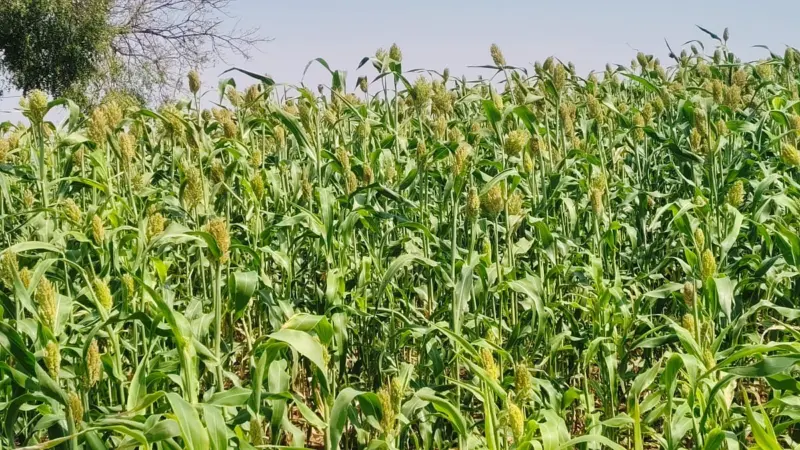

The surging Doni river during the monsoon is often called the sorrow of Vijayapura, as it submerges vast tracts of agricultural land in the district's central part.
In winter, however, it turns into a blessing, as its nutrient-rich alluvial soil helps the cultivation of Maldandi, a unique jowar variety.
Thanks to the Krishna, Bhima, Doni, Ghataprabha and Malaprabha rivers, Vijayapura has earned the title 'Punjab of Karnataka'. Its red and black soils, coupled with extensive irrigation, have turned this region into an agriculture and horticulture hub, especially for grapes and lemons. The distinctively tangy Indi lemons from the district recently secured a geographical indication (GI) tag, placing it on the global map. Now, the Maldandi white jowar (sorghum), fondly called 'Bijapur's white pearl', is also seeking a GI tag.
Maldandi, a distinctive white jowar variety, thrives even under minimal rainfall. Unlike water-intensive crops, it grows on residual soil moisture in winter, maintaining steady yields even under harsh sunlight and dry conditions. Its grains, uniform in size and shape, have a pearly white sheen that gives the variety its name.
Paddy legacy in a coffee landscapeJowar is a staple crop in North Karnataka, with white jowar cultivation spread across regions such as Nargund and Ron in Gadag district, Ramdurg and Savadatti in Belagavi district, Navalgund and Dharwad in Dharwad district, and parts of Kalaburagi. However, according to Vijayapura Joint Director of Agriculture Shivanagouda Biradar, there is a marked difference in the Maldandi white jowar grown along the Doni river basin, a tributary of the Krishna.
"The Doni carries nutrient-rich alluvial deposits during the monsoon and spreads them across thousands of acres of farmland. This natural enrichment, combined with the region's winter climate, gives Maldandi its distinct quality and taste," he explains.
Cultural resonance
In North Karnataka, Maldandi white jowar is more than just a crop. It is a cultural cornerstone. For generations, jowar rotti has been central to daily meals, with locals often saying a meal is incomplete without it. Served hot and fresh or as khadak rotti (cooked longer to make it crisp and extend shelf life), it is typically paired with side dishes like brinjal curry, groundnut chutney and curds, especially the creamy curd from nearby Korti-Kolhar. The combination is popular not only in rural homes of North Karnataka but also in cities like Bengaluru.
Nutritionally, Maldandi jowar is a fibre-rich millet known for its cooling properties, making it well-suited to the region's hot climate. Its byproducts, such as kanaki (broken grain), are widely used as nutritious livestock fodder. A key feature of Maldandi rotti is its long shelf life, it can be stored for months without losing its taste or texture, making it ideal for travel and storage.
Maldandi white jowar has a documented history of at least 200 years, with a British-era gazetteer indicating its cultivation in the Doni basin since 1818. Its presence in the region is reflected in the Vachanas, folk literature and even institutional symbols, underscoring its cultural and historical significance.
More than a spice, the versatile Jummana Kayi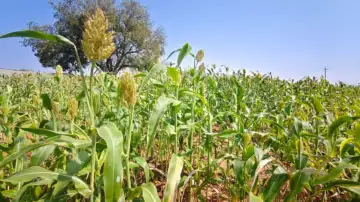
Maldandi white jowar cultivated on the banks of the Doni river in Vijayapura district.
Seethani fest
One of the cherished traditions associated with Maldandi jowar is the preparation of seethani. Before harvest, the tender ones are roasted over open flames, deshusked and seasoned with salt and spices. This simple yet flavourful snack evokes nostalgia and is a seasonal favourite across north Karnataka. In recent years, as part of cultural and agro-tourism initiatives, farmers have begun organising Seethani festivals, where visitors can enjoy freshly prepared seethani while experiencing farm life and local cuisine.
Losing ground
However, the cultivation of Maldandi white jowar has declined over the past decade. In 2009, it covered nearly 2.5 lakh hectares in Vijayapura district alone; today, it has fallen to around 59,000 hectares.
Progressive farmer Mallikarjun Budihal notes that Maldandi jowar once ensured both food security and income for farmers, even during the harshest droughts. Its leaves and stems were also used as cattle fodder. However, with the expansion of irrigation and the rise of mechanised farming, many farmers are shifting to more remunerative crops such as pigeon pea, sugarcane, cotton, maize and chickpea.
Currently, Maldandi yields about four to five quintals per acre over a four-month winter season, with market prices ranging between Rs 3,500 and Rs 4,000 per quintal. While demand exists in Karnataka, Maharashtra and Gujarat, the key challenge lies in preserving its nativity, as farmers increasingly sell different white jowar varieties in the name of Maldandi, eroding its distinct identity.
Biradar says groundwork is underway to secure a GI tag for Maldandi white jowar. Multiple rounds of discussions have been held with scientists and officials, and soil and crop samples from Vijayapura and nearby districts, including Bagalkot, Belagavi, Dharwad, Raichur, Gadag and Ballari, have been sent for analysis. A scientific report is being prepared to support the application, which will soon be submitted to the GI registry office in Chennai.
Officials say a GI tag could be a turning point for Maldandi white jowar, helping protect its identity, enhance market value and encourage its cultivation and sustainable farming practices.
India braces for unusually hot March; wheat, rapeseed crops at risk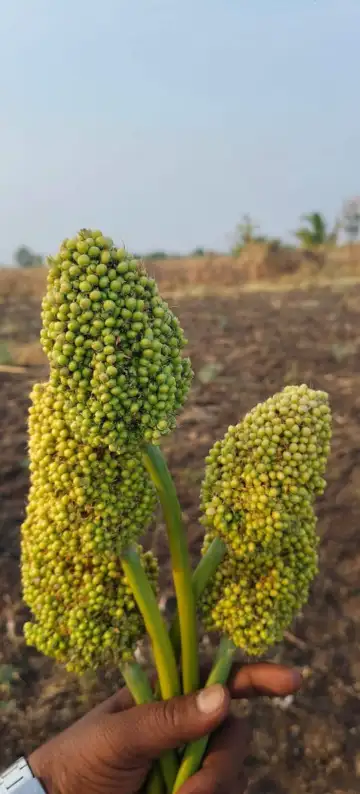
Maldandi white jowar.
However, experts say official recognition alone is not enough. They stress the need for coordinated efforts among farmers, researchers and policymakers to conserve the original variety, expand its cultivation and ensure its continuity for future generations.
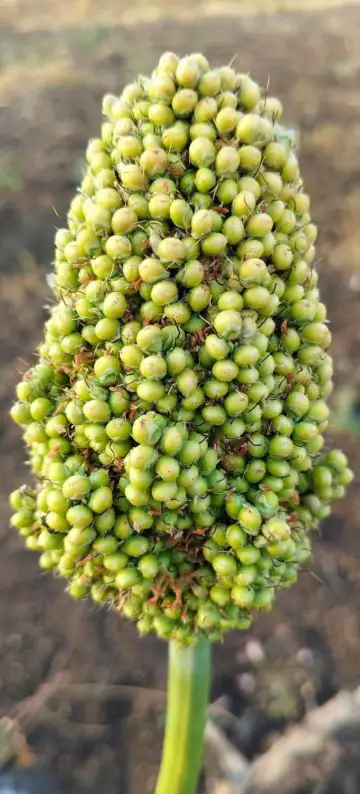
Maldandi white jowar.
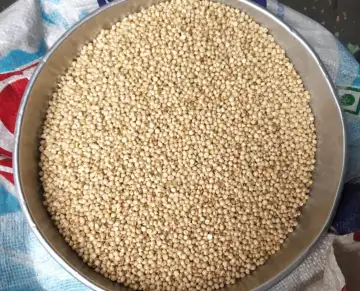
Maldandi white jowar.
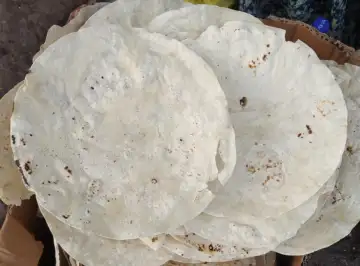
Khadak rotti made of Maldandi white jowar.
(Translated from Kannada by Pavan Kumar H)
Many varieties of jowar
North Karnataka is home to at least 40 native varieties of jowar. Jowar grown in the Rabi season is preferred for consumption while the Kharif jowar is mostly used as fodder. Among the varieties consumed Maldandi is the most preferred for preparing rottis as its dough has the right amount of stickiness. Apart from this varieties such as Gatti Tene Kempu Sakkari Mukri and Kadabina Jola are used to prepare dishes like mudde sangati kadabu and other sweet dishes. "The Aralu jola is used to make popcorn. Kannu Mucchuga which gets its name from a black eye and eyelash-like marking on the grain is used to prepare madli a sweet dish. Then there is the Bhogapura variety which grows up to 14 feet tall and is mainly used as fodder" explains agriculture expert Anandateertha Pyati.