




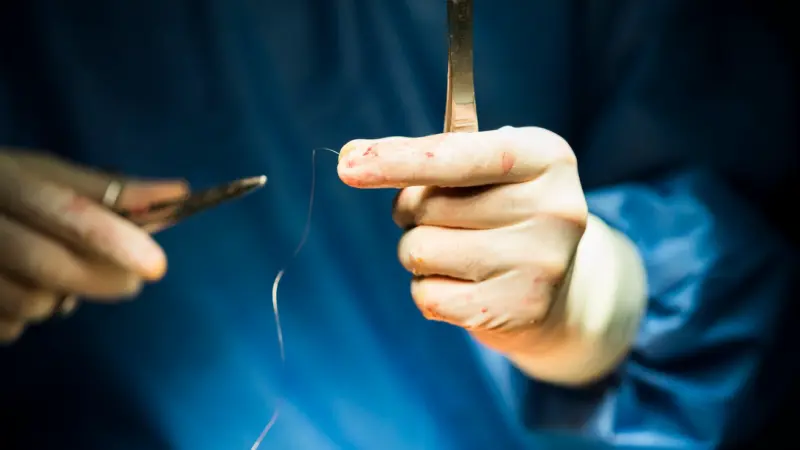

Some call it a joke, some a myth and others an outdated medical practice. The history of a 'husband stitch' is comparable to a ghost with rarely any evidence to ground the unethical procedure into reality.
Passed on through individual anecdotes, this extra stitch after childbirth has been a disturbing truth for many birthing parents.
It is common for women to have vaginal tears after childbirth, particularly when cuts are made to widen the birth canal. A skilled birth attendant is accustomed to sew up the wounds or tears in the peritoneum (membrane lining the abdominal cavity) following the delivery. While most of the stitches are medically necessary, an extra tuck for cosmetic purposes or pleasure has been called the controversial 'husband stitch' and is deemed unethical in the medical community.
As per TOI, obstetricians in Bengaluru still receive occasional requests for the procedure once in a while.
Likewise, The Weekalso reiterated the story (2022) of a woman in Bengaluru who had refused to give natural birth in fear of a husband stitch, an additional tuck she had received following a vaginal birth in the past, resulting in severe abdominal pain.
The term became popular after the publishing of the book 'The Husband Stitch' by the author Carmen Maria Machado in which she narrated a similar plotline.
Dissecting fear: Why women are still scared of C-sections?Loss of bodily autonomy
In most anecdotal cases, a husband's stitch is made without the consent of the birthing parent or due to low awareness of the consequences of the procedure.
Many times, it is the partner of the birthing parent who might request the birth attendant to sew an extra stitch for enhancing sexual pleasure. Sometimes, it could be the birthing parent who demands it for cosmetic tightening. In either case, the procedure has ill effects on the patient.
Speaking to DH, Dr. Shweta Bansal Wazir, an obstetrician at the Motherhood hospital (Gurgaon) said: "It is widely regarded as unethical because it prioritizes perceived sexual satisfaction of a partner over the health, comfort, and autonomy of the woman who has just given birth. From an ethical standpoint, one of the most serious concerns is the lack of informed consent. In many reported cases, women were either not informed or not properly consulted before such a stitch was placed."
It can also lead to chronic pain, abdominal discomfort, difficulty during sexual activity, and even emotional distress in patients, the expert informed.
More than good, a medically irrelevant stitch could complicate the usual healing process after birthing a child.
"Today we prioritize medical practices that are patient-centric and in no manner undermines their consent," added Dr. Wazir.
Episiotomy in needful cases
Episiotomy is a routine surgical cut made to enlarge the vaginal opening during childbirth. Once the canal has been opened up, it has to be sewed back after the baby is delivered. At this point, the surgeon needs to make calculated stitches to allow the area to heal and return to its original shape.
Speaking to DH, Dr. Archana Dhawan Bajaj, gynaecologist and IVF expert at Nurture IVF Clinic explained the purpose of an episiotomy and its after care, she said: "Women who give birth vaginally may develop tears of varying degrees to the perineum. An episiotomy, which is less common now, is performed to aid the birth. However, the postpartum repair aims to repair torn tissues to allow the mother's body to heal well and restore pelvic function."
"An extra stitch during this repair work does not have any clinical intent," added Dr. Bajaj.
The vaginal repairs can sometimes feel tighter right after the childbirth and this can cause misunderstandings in a few cases, warned Dr. Wazir, who said the comfort shall return during the course of healing.
Although, she didn't deny that the practice was just a medical myth and acknowledged it might be happening in isolated clinics.
Most clinical experts claim that 'husband stitch' is not a routine occurrence in medicine and medical professionals are strictly guided to not entertain any requests if they undermine a patient's consent and well being.