

The most profound change in the Gulf, whether the ceasefire holds or breaks down, is that the Strait of Hormuz, through which India receives the bulk of its crude oil and gas, will no longer be an international waterway.
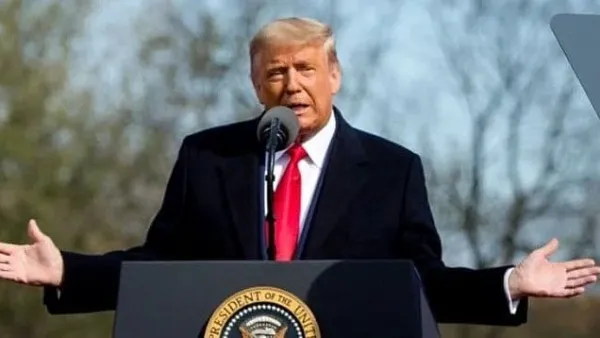
How can anyone be sure of this when peace talks to end the war have not even started in Islamabad at the time of writing this? Because United States President Donald Trump has smelt greenbacks in the lucrative waterway. Trump told ABC News overnight after the ceasefire announcement that the US will propose a joint venture with Iran for securing the Strait of Hormuz during the peace talks. Asked by veteran ABC reporter Jonathan Karl if he would allow Iran to charge a toll on vessels passing the critical choke point, Trump said a joint venture with Iran to manage the strait would be "a beautiful thing." Under worldwide pressure, including from US allies, Trump has subsequently softened his position on this. But if the toll issue is a deal breaker, he may agree to Iran's demand.
Such a plan would be in line with Trump's cynical proposal earlier to expel native Palestinians from the Gaza Strip, take over its ownership by the US and convert the picturesque coastal location into a "Riviera of the Middle East." At the start of his second presidency, Trump also wanted Panama to throw out the Chinese company managing the Panama Canal and takeover the money-spinning Canal in the backyard, as it were, of the US.
India treads cautiously as Trump's Hormuz gamble faltersAccording to leaks surrounding preparations for the peace negotiations, Iran and Oman - in whose territorial waters the Strait of Hormuz falls - are already in tacit agreement that they would charge tolls henceforth on vessels passing the waterway. For the record, Oman has denied any such plans. There is no historical record of any ship having paid tolls to pass this choke point. Both Iran and Oman allowed it to be treated as an international waterway. With Trump now fantasising about Iranian levies on ships and hoping for a share of the windfall income as 'a beautiful thing', changes in shipping practices there are very likely.
If it happens, it will push up the cost of all types of fuel for Indian consumers significantly and permanently. The cost increase cannot be contained by any amount of excise duty cuts, such as the one announced by the Indian government since the start of the war. This issue is expected to figure in discussions in Abu Dhabi between External Affairs Minister S Jaishankar and the leadership of the United Arab Emirates during this weekend. Sultan Al Jaber, Group CEO of the Abu Dhabi National Oil Company, repository of the UAE's oil income, has already said "the Strait must be open - fully, unconditionally and without restriction. Energy security and global economic stability depend on it." Al Jaber, who has been speaking out since the start of the conflict on energy positions of the UAE, which accounted for pre-war global oil production of 4% said: "Iran has made clear…that passage (through the Strait) is subject to permission, conditions and political leverage. That is not freedom of navigation. That is coercion." Jaishankar would not disagree. Nor would Petroleum and Natural Gas Minister Hardeep Singh Puri, who became the first Indian minister to go to the Gulf - to gas-rich Qatar - since the war began.
How might Strait of Hormuz be reopened? Here are 3 scenariosThe other certainty flowing from the impending peace talks in Islamabad is a greater role for Russia and China in the Gulf. Precisely what successive administrations in Washington have been trying to thwart for decades. It has been lost on the world that Russia's TASS news agency had a worldwide scoop on Thursday that Iran peace talks would start in Islamabad on Saturday, and that the venue would most likely be the famous, Aga Khan-funded Serena Hotel there. This happened even as the US media was still speculating on the date, time, and venue of the parleys. TASS was candid enough to admit that it scooped the venue simply by talking to hotel employees who were helping all hotel guests to vacate their rooms. 'Elementary, my dear Watson', as Sherlock Holmes would have said. Serena Hotel has subsequently been requisitioned by the Pakistan government, although there is no official announcement yet about any of this. The US and Iranian embassies spurned requests from TASS for confirmation.
China has denied having helped Iran militarily during the conflict. That is typical. It is not China's style to do so. Beijing's role in the post-war Gulf would be financial. Iran has made it clear that its foreign currency of choice after the war would be the yuan. There have already been reports about yuan changing hands as ransom for allowing ships to transit the Strait of Hormuz. A few days ago, New Delhi strongly denied that it paid Iran in yuan for allowing India-bound tankers to bring oil and gas to through the waterway. The denial is being viewed sceptically.
In my long years as a reporter, there have been scores of instances where the Ministry of External Affairs denied news stories, only to reveal in a matter of days that the denial was proforma and fake.
K P Nayar has extensively covered West Asia and reported from Washington as a foreign correspondent for 15 years.
Disclaimer: The views expressed above are the author's own. They do not necessarily reflect the views of DH.