




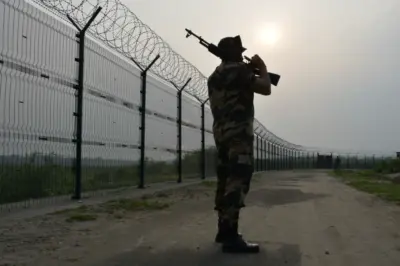

Dibrugarh: The Centre has begun installing border fencing along sections of the India-Myanmar border in eastern Arunachal Pradesh as part of efforts to curb insurgency and strengthen security in the state's Tirap, Changlang and Longding (TCL) districts.
The TCL region shares an international boundary with Myanmar and has long been affected by insurgency-related activities.
Security agencies have often pointed to the use of camps across the border by various Northeast-based militant groups, which allegedly cross through forested routes into the region to carry out operations.
Myanmar shares a 1,643-km border with India across Arunachal Pradesh, Mizoram, Manipur and Nagaland. Arunachal Pradesh accounts for the longest stretch at 520 km, followed by Mizoram (510 km), Manipur (398 km) and Nagaland (215 km).
"Eastern Arunachal Pradesh remains particularly sensitive from a security perspective because it shares the longest boundary with Myanmar. The TCL region has historically witnessed insurgency-related activities, including extortion and kidnapping. Businessmen in the area have often faced demands from militant groups," a source said.
The fencing work is being carried out by the Border Roads Organisation (BRO), while security forces are maintaining strict surveillance and providing protection to personnel engaged in the project.
"The work in the Pangsau Pass area of Changlang district, which began in November last year, is continuing despite threats from militant outfits active in the region and challenging weather conditions," an official said.
According to officials, the Centre has sanctioned approximately ₹31,000 crore for border fencing and related infrastructure along the India-Myanmar border, with instructions to expedite the work.
Security officials believe the project could significantly impact the movement of insurgent groups operating in the region by restricting cross-border access and disrupting their logistical networks.
"Several militant groups active in the TCL region are unhappy with the fencing project because its completion could severely restrict their movement and affect their supply lines. It would also make it more difficult for them to sustain extortion networks in the area," an official said.
Officials said the project forms part of a broader strategy to enhance border management, strengthen security infrastructure and improve stability in the insurgency-affected districts of eastern Arunachal Pradesh.
Explained: How Buddhist nationalism enabled repression in post-coup Myanmar