
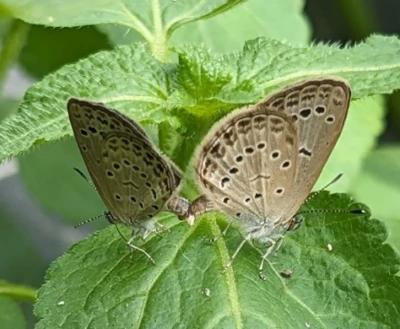

Guwahati: In the forests of Arunachal Pradesh's Talle Valley Wildlife Sanctuary, butterfly courtship is far from delicate. Males engage in aerial duels, chasing rivals in tight spirals and sudden straight-line pursuits.
Females respond with calculated wing flicks, subtle twirls, or outright rejection. And in one remarkable case, a mating pair remained locked together for 168 minutes - nearly three hours.
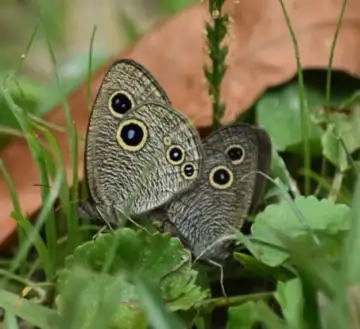 Y.huebneri
A new peer-reviewed study by researchers from North-Eastern Hill University (NEHU), Shillong, has documented, for the first time, the detailed courtship and mating behaviour of 14 butterfly species in the wild landscapes of the Eastern Himalaya. Conducted between 2021 and 2023, the research captures a rarely recorded dimension of Northeast India's biodiversity - the hidden strategies that determine reproductive success in the wild.
The research was conducted by Tajo Kamra and Sudhanya Ray Hajong of the Department of Zoology, North-Eastern Hill University.
While the state is celebrated for its butterfly diversity, systematic field documentation of mating behaviour in natural habitats has remained largely absent until now.
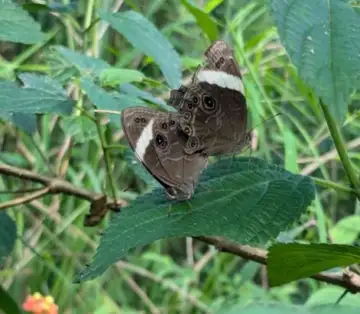 L.verma
The study found that male butterflies displayed a wider range of behaviours than females. They perched strategically, patrolled territories, and launched pursuit flights when a potential mate entered their range. In several species, rival males interrupted courtship attempts, leading to mid-air contests that resembled aerial dogfights.
Two distinct chase patterns were observed - circular spirals and straight-line territorial pursuits - suggesting species-specific strategies for defending mating opportunities.
Females, however, ultimately controlled the outcome. Signals such as wing fluttering, abdominal raising, and directional twirling served as indicators of acceptance or rejection. In some cases, females flew away despite persistent male advances, underscoring the role of female choice in shaping reproductive outcomes.
Among the most striking findings was the prolonged copulation of the Blue Pansy (Junonia orithya), which lasted 168 minutes - the longest recorded during the study. By contrast, Heliophorus epicles recorded the shortest successful mating at 40 minutes.
 Junonia orithya
Other species showed varying durations, with some mating for over two hours. Researchers suggest that longer copulations may function as mate-guarding strategies, ensuring that rival males do not interfere.
Overall, fewer than half of the 14 species observed achieved successful copulation. An equal proportion experienced interruptions, while a smaller fraction ended in outright female rejection.
 Heliophorus epicles
The timing of courtship also mattered. While pre-monsoon and monsoon periods saw active mating attempts, interruptions were frequent. The post-monsoon season, however, yielded the longest and most stable copulations, including the 168-minute event.
These seasonal shifts indicate that ecological conditions - including weather and competition levels - influence mating success.
Arunachal Pradesh lies at the intersection of the Indo-Burma and Eastern Himalaya biodiversity hotspots, making it one of the most biologically significant regions in the world. Yet, systematic documentation of butterfly mating behaviour from the state has remained extremely limited.
 Credit: DIPR
By recording male, female and paired behaviours across seasons, the NEHU study provides crucial baseline data for future behavioural and ecological research. Understanding how butterflies court, compete and reproduce is not merely academic - reproductive strategies determine population stability, species persistence, and adaptation in changing climates.
In a region celebrated for its forests, orchids and large mammals, this study shifts attention to a smaller but equally complex world.