
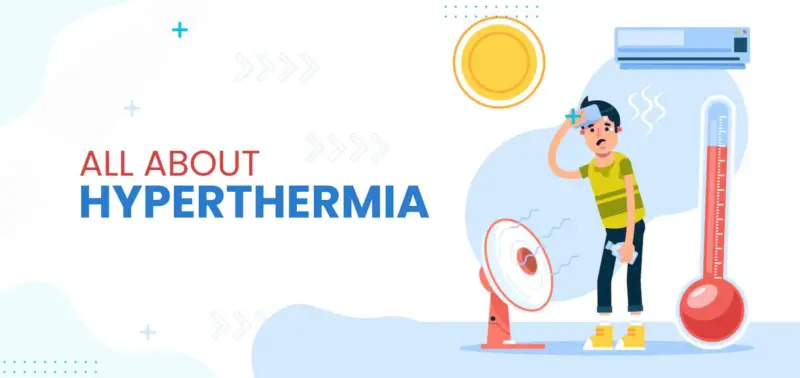

All About Hyperthermia: Causes, Symptoms, and How to Prevent It: By Ambika Mondal
Hot weather can cause a lot of discomfort.
But did you know?
It can also affect your body's day-to-day functions.
When temperatures rise, and your body fails to cool itself, it can lead to hyperthermia.
It is often ignored at the beginning, and that's one of the biggest mistakes you can make.
Because, if not managed properly, hyperthermia can escalate at full speed.
Hence, understanding what it is, why it happens, and how to manage it can help you ensure that it doesn't develop into a serious heat-related health risk.
What Is Hyperthermia?
Hyperthermia is a condition in which your body temperature rises above normal because it cannot cool itself properly.
Simply put, hyperthermia is overheating caused by external heat rather than illness or infection.
When you spend too much time in hot weather or poorly ventilated spaces, your body can have difficulty releasing heat through sweating.
And this can lead to a high body temperature, which can worsen if not managed in time.Wondering how it begins and what it can lead to? Well, it usually starts with excessive sweating, dizziness, and/or fatigue.
But if overlooked, it can progress to more serious stages such as heat exhaustion or even heatstroke.
This is exactly why recognising early symptoms of hyperthermia matters.
However, prevention is still the most reliable approach to staying safe.
Hence, this article covers symptoms, causes, and prevention tips for hyperthermia.

Signs and Symptoms of Hyperthermia
Recognising the early signs can help you act before the condition becomes serious.
It often begins with mild discomfort but can quickly progress into more dangerous stages like heat exhaustion and even severe heat stroke symptoms if ignored.
Paying attention to how your body feels in hot weather is key.Common signs and symptoms include:Excessive sweating: This is your body's first attempt to cool down.
During heat exhaustion, you may notice continuous, heavy sweating that soaks your clothes and leaves you feeling unusually tired and dehydrated.Dizziness or lightheadedness: Heat can cause your blood pressure to drop.
This makes you feel faint, especially when standing or moving quickly, and can increase the risk of falls.Fatigue and weakness: As your body works harder to regulate temperature, it uses up more energy.
This can leave you feeling drained, sluggish, and unable to carry out normal activities.Nausea or vomiting: Overheating can affect your digestive system, leading to a queasy feeling or even vomiting.
This is often a clear sign that your body is struggling to cope with the heat.Rapid heartbeat: Your heart pumps faster to help move heat away from your core.
A noticeably quick or pounding pulse can indicate that your body is under stress from high temperatures.Confusion or disorientation: One of the more serious heat stroke symptoms, this happens when extreme heat begins to affect brain function.
You may feel confused, have trouble focusing, or behave unusually.Hot, dry skin: In severe cases, sweating may stop completely.
The skin can feel hot and dry to the touch, which is a warning sign that the body's cooling system has failed, and urgent medical attention is needed.Also Read: Your Guide to Sun Allergy: Symptoms, Prevention and Treatment

Click to read more
www.justdial.com