

Table of Contents
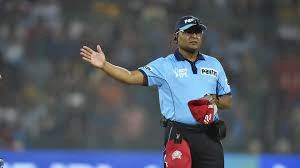
ToggleHow to become a cricket umpire in India – A Cricket Umpire is one of the most significant jobs undertaken by an individual in a cricket match. However, to become a Cricket Umpire in India, you must first register with your respective State Cricket Associations and pass a written and oral exam. To become an umpire with the BCCI, you must first officiate in local cricket matches and then pass the BCCI Level 1 and Level 2 examinations. But what abilities are required? Is it necessary to have previously played cricket to be a cricket umpire? So, in this blog, we will look at how to become a cricket umpire in India and some of the names of Indian umpires.
We’ll address all of these concerns and explain how you might pursue a career as a cricket umpire. So, without further ado, let’s get right down to business.
How to become a cricket umpire is a common query for those passionate about officiating the sport. To understand how to become a cricket umpire, candidates must first gain in-depth knowledge of cricket rules and regulations.
In India, what qualifications & skills are required to become a cricket umpire?
The role of an umpire is frequently overlooked. As a result, while considering becoming an umpire, it’s easy to overlook the fact that it’s a highly skilled and physically hard job. A person’s qualifications to be a cricket umpire are based on several factors. The following are some of them:
- To be an umpire, you must have the following qualifications.
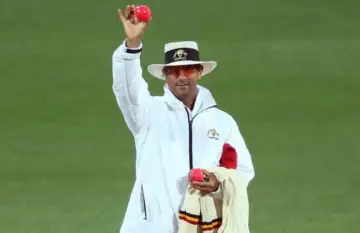 Read Also | Learn All about Cricket umpire signals and what they mean
Educational Requirement
 Image Source- Monster India
In India, there are no educational prerequisites for becoming an umpire. However, to learn all of the key rules of Cricket, one must be able to read and write. Furthermore, if one does become an international umpire (which would be the final goal for pursuing this as a career), the individual should be able to communicate in English freely
Qualify for the theory exams
 Image Caption- Dreamstine.com
To be competent to adjudicate a cricket match as an umpire, you must have a thorough understanding of the game. This necessitates a thorough understanding of the 42 Cricket Laws. Additionally, passing the theory tests administered by state sports organizations such as the Mumbai Cricket Association (MCA) or the Delhi and District Cricket Association is one of the qualifications for becoming an umpire (DDCA). Only after passing the theory examinations are you entitled to take the exams administered by the Board of Control for Cricket in India (BCCI). Umpires must pass the BCCI exams to be recognized and inducted as umpires.
Physical stamina
 Image Source- HealthifyMe
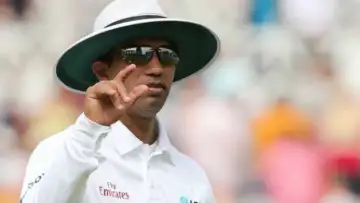
Unlike a cricket player who can relax when his team is batting, an umpire must be on the field whether the team is batting or bowling. As a result, an umpire must be physically fit. Fitness isn’t simply about being able to stand for long periods on the field. It also includes having good vision and hearing ability. Hearing and vision are critical in determining whether or not a batter should be dismissed. Another quality that an umpire must possess is the capacity to concentrate for long periods.
 Also Read | Top 10 Cricket Umpire Salary
What skills do you need to be an umpire?
There are a few abilities that a cricket umpire should have in addition to the fundamental credentials mentioned above. These are listed further down.
Ability to Make Sound Decisions
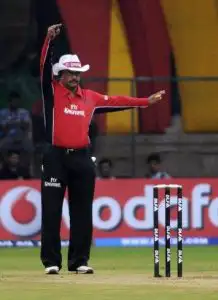 Image Source- Sportstar, The Hindu
This is one of the most vital talents to have if you want to be a competent cricket umpire. An umpire’s ability to make the proper decision under pressure is crucial to his or her success. In addition, poor judgments can hurt the umpire’s career as well as the match’s outcome. It’s crucial to remember that not only must you make the right decision, but you must do so quickly! An umpire has just only a few seconds to decide whether or not to dismiss a batsman. To make a judgment, an umpire does not have the luxury of taking a few hours or watching many replays.
Ability to multitask
 Image Source- Freepik
The duty of an umpire is frequently assumed to be confined to deciding on no balls, wide balls, and whether or not a batsman should be given out. However, this is a partial comprehension. An umpire is typically asked to perform a wide range of tasks.
As a result, an umpire is supposed to be a multi-tasking master. Did you know that an umpire must use a clicker to keep track of every single ball bowled and wickets lost. This, paired with a bowler overstepping or sprinting on the pitch, is a recipe for disaster. Not to mention any on-field personal issues, the ball’s changing form, the amount of light (if it’s enough for safe play), any fielder tampering with the ball, and so on. These are only a handful of the activities that take place on the ground. After the match, the umpire has additional obligations, such as filing the match report. These tasks necessitate a lot of multitasking on the part of the umpire.
 Also Read | 20 best cricket umpires in the world of all time
Interpersonal skills
 Image Source- Wealth of Geeks
Another crucial talent that an umpire must possess is the ability to manage people.
Being an authority and officiating a contest are two of the most important tasks of an umpire during a cricket match. Because cricket is a team sport, it necessitates the coordination of numerous players. Issues may emerge amongst team members or between rival team players from time to time. It is the cricket umpire’s responsibility to handle such circumstances and guarantee that the spirit of the game is upheld. An umpire with good people management abilities will have little trouble navigating through such circumstances.
How to Become an Indian Cricket Umpire
In order to become a cricket umpire in India, one must undergo extensive preparation and study, as well as several viewings of cricket matches to gain a full understanding of the game.
Step 1: Contact your state cricket association for information
The process of becoming an umpire begins with your state’s cricket associations. Each state’s governing cricket body is called a state cricket association. This can be thought of as a mini-BCCI that is in charge of a single state. It’s critical to stay informed about the operations of your particular state cricket bodies. Your state cricket organization can assist you with the umpire certification exam that will be held in your state. The dates will be available to you.
Courses and exams for umpire certification are solely dependent on need. As a result, they don’t have a set schedule. As a result, it’s critical to stay in touch with your state cricket organizations to acquire the most up-to-date information on the dates of such events.
Step 2: Pass the Umpire Certification Examination
Passing the umpire certification exam is one of the most critical steps toward becoming a cricket umpire.
Here are some things to keep in mind when taking the umpire certification exam:
- Most State Cricket Associations offer a four-day umpire certification program that includes all of the necessary training and information.
- The first three days of this program are normally dedicated to training and knowledge transfer, with the umpire certification exam taking place on the fourth day.
- The MCC laws are frequently used as the basis for the certification test (which are otherwise known as the 42 Laws of Cricket). As a result, you must be well-versed in cricket’s rules.
- The certification exam is divided into three rounds. The theory is the subject of the first round. Only those who pass the first round are eligible to move on to the next phase of practical and oral questioning (viva).
- If you pass all of these rounds, you will be eligible to adjudicate matches organized by that state’s cricket association as an umpire.
 Also Read | Top 10 All-Time Best Bowler in the World
Step 3: Participate in matches sanctioned by your state cricket association
The Board of Control for Cricket in India (BCCI) conducts umpiring exams as part of the process for how to become a cricket umpire. Clearing the BCCI Level 1 and Level 2 exams is essential for those aiming to learn how to become a cricket umpire professionally.
After passing all three rounds of the umpire certification exam, you will be recognized as a certified umpire in cricket matches organized by the cricket organization. In addition to making decisions as an umpire during these matches, your performance is evaluated by match reports, which are recorded at the end of each match. Depending on your performance, you may be required to work as an umpire for 2 to 3 years. You may be forced to take annual refresher exams. You will undoubtedly be recognized and identified for the BCCI Level 1 examination once you begin generating regular performance.
Step 4: Pass the Level 1 BCCI Exam
The BCCI Level 1 examination is the next step toward becoming an umpire. You must go through an internal screening process to be eligible to take the BCCI level 1 examination. The parameters for this assessment are not entirely obvious, although they are heavily influenced by your performance. After being shortlisted for the BCCI Level 1 examination, you must engage in and attend a BCCI Level 1 program. This curriculum follows a format that is comparable to that of the umpire certification program.
As a result, you must not only attend the program but also pass the theory examination afterward. After passing the BCCI level 1 exam, you must complete a one-year refresher course offered by BCCI. Only after passing the refresher exam will you be eligible to take the next step, the BCCI level 2 exam. However, as of 2019, the obligation to take a refresher course after passing the BCCI level 1 exam has been removed from the process. Clearing level 1 theory now automatically qualifies you for the BCCI Level 2 theory exam.
Step 5: Pass the Level 2 BCCI Exam
After completing the BCCI Level 1 refresher course, you are qualified to sit for the BCCI Level 2 examination. As previously stated, this refresher course must be taken within one year of passing the BCCI Level 1 test. The nature and format of the BCCI level 2 examination are similar to those of the previous exams. The level 2 test is also divided into three parts: theory, practical, and oral (Viva). You will be appointed as a BCCI Umpire if you have passed the BCCI level 2 examination. This implies you’ll be able to compete in both domestic and international matches organized by the BCCI.
Some of the Popular Indian Cricket Umpires
1. Javagal Srinath: Former Indian fast bowler who has worked on a large number of international matches across formats-one-day internationals and Tests.
2. Nitin Menon: Experienced Indian umpire Nitin Menon officiated in numerous international matches, among which is Tests, ODIs, and T20I.
3. Sundaram Ravi: Veteran umpire from India, Ravi officiated many international matches, including Tests, ODIs, and T20Is.
4. Anil Chaudhary: An Indian umpire having vast experience, Chaudhary has served in numerous local as well as international matches.
5. Srinivasaraghavan Venkataraghavan: Former Indian cricket and umpiring personality has officiated in many international matches, including Tests and ODIs.
6. Chettithody Shamshuddin: An Indian umpire who has completed national and international cricket, Shamshuddin has stood for many matches, including Tests and ODIs.
7. K. N. Ananthapadmanabhan: An Indian umpire sailing in domestic cricket, Ananthapadmanabhan served in numerous matches such as first-class and List A games.
8. C. K. Nandan: An Indian umpire who has officiated in domestic cricket, Nandan has served in numerous matches, including first-class and List A games.
FAQs
1. What are the basic qualifications required to become a cricket umpire in India?
A: To become a cricket umpire in India, one must have a thorough understanding of cricket rules and regulations. There are no specific educational requirements, but one must be able to read and write.
2. How do I get certified as a cricket umpire in India?
A: To get certified, contact your state cricket association for information on umpire certification programs. Pass the umpire certification exam, which includes theory, practical, and oral questioning.
3. What is the process to become a BCCI-certified cricket umpire?
A: After getting certified by your state cricket association, participate in matches sanctioned by them. Then, pass the BCCI Level 1 and Level 2 exams to become a BCCI-certified umpire.
4. How to become a cricket umpire professionally in India?
A: To become a professional cricket umpire, gain experience by officiating in local matches. Then, clear the BCCI Level 1 and Level 2 exams to get recognized as a professional umpire.
5. What skills are required to become a successful cricket umpire?
A: A cricket umpire should possess skills like sound decision-making, multitasking, and good interpersonal skills. Physical stamina, good vision, and hearing ability are also essential.
 Top 10 Best Cricket Bats For Leather Balls | Have A Go At The Bowlers