
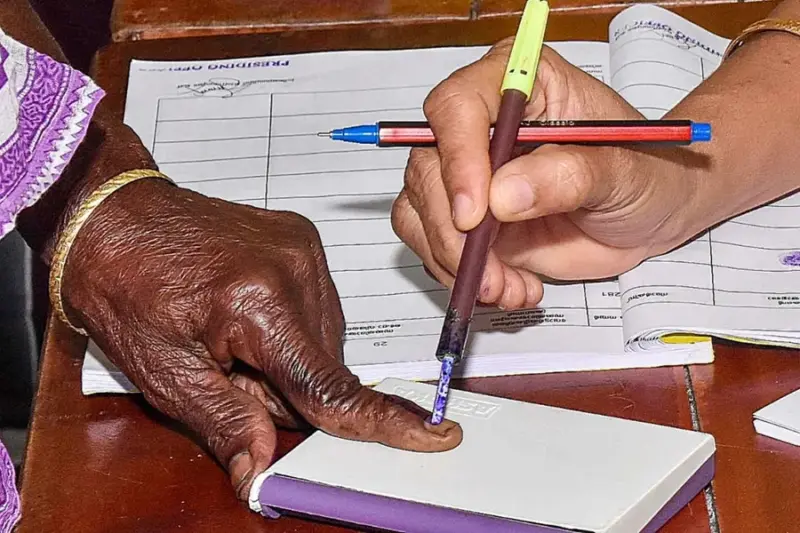

The Election Commission of India has officially announced the schedule for the 2026 Kerala Assembly elections, setting the stage for a crucial political contest in the state.
The elections will determine who governs Kerala for the next five years, with major political alliances already intensifying their campaigns.
As per the announced timeline, the notification for the elections was issued on March 16, 2026. The last date for filing nominations is March 23, followed by scrutiny on March 24. Candidates can withdraw their nominations until March 26. Voting will be conducted in a single phase on April 9, 2026, across all 140 constituencies, while the counting of votes is scheduled for May 4, 2026. The entire election process is expected to be completed by May 6, ahead of the current Assembly's term ending on May 23, 2026.
Key election dates announced
According to the poll panel, the election process will follow a structured timeline:
- Notification date: March 16, 2026
- Last date for nominations: March 23, 2026
- Scrutiny of nominations: March 24, 2026
- Last date for withdrawal: March 26, 2026
- Voting date: April 9, 2026 (single phase)
- Counting of votes: May 4, 2026
- Completion of election process: May 6, 2026
The elections will be conducted in a single phase across all 140 constituencies in Kerala. The current Assembly's term is set to conclude on May 23, 2026.
Voter details and polling arrangements
Kerala has a total of approximately 2.71 crore registered voters, including general and service electors. Among them:
- Over 1.38 crore are women voters
- Around 1.31 crore are men
- 277 voters are registered under the transgender category
- More than 4.24 lakh voters are aged 18-19
- Over 2 lakh voters are above 85 years
- Around 2.44 lakh are persons with disabilities
Polling infrastructure has been expanded to ensure smooth voting, with tens of thousands of polling stations planned across urban and rural areas. Measures such as capping voters per booth and enabling webcasting at polling stations are aimed at improving transparency and efficiency.
Special polling stations, including those managed entirely by women and persons with disabilities, are also part of the arrangements.
Political contest intensifies
The election is expected to see a strong contest between the ruling Left Democratic Front (LDF), the opposition United Democratic Front (UDF), and the BJP-led National Democratic Alliance (NDA).
A party or coalition will need at least 71 seats to form the government in the 140-member Assembly.
Key constituencies to watch
Several constituencies are expected to play a decisive role in determining the outcome, including:
- Thiruvananthapuram
- Palakkad
- Wayanad
- Ernakulam
- Thrissur
- Kozhikode
- Kannur
- Malappuram
- Kottayam
These constituencies are known for closely fought contests and often influence the overall electoral outcome.
Model Code of Conduct in force
With the announcement of the schedule, the Model Code of Conduct has come into immediate effect. Political parties have intensified campaign efforts, while authorities are focusing on ensuring free and fair elections.