




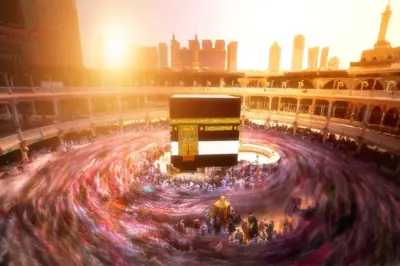

Hajj is expected to bring millions of Muslims from across the world to the holy city of Mecca in Saudi Arabia. The annual pilgrimage is one of the largest religious gatherings on the planet and holds deep spiritual importance in Islam.
For many believers, it is a once-in-a-lifetime journey. Hajj is not just travel but a structured act of worship that follows specific rituals, sacred routes, and historical sites connected to Islamic tradition.
What is Hajj?
Hajj is the annual Islamic pilgrimage to Mecca and is considered the fifth pillar of Islam. It is mandatory for adult Muslims who are physically and financially able to undertake the journey at least once in their lifetime.
The pilgrimage is a sequence of religious rituals performed over several days. These acts symbolise devotion to God, equality among believers, discipline, and spiritual renewal.
During Hajj, pilgrims wear simple white garments known as Ihram. This removes differences of wealth, nationality, and social status, creating a shared sense of equality before God.
Can anyone visit Mecca?
Mecca is one of the most restricted cities in the world due to its religious significance.
Only Muslims are allowed to enter the city and participate in Hajj or Umrah. This rule is strictly enforced by Saudi authorities.
Non-Muslims are not permitted to enter Mecca or its central sacred areas, including the Grand Mosque. The restriction is in place to preserve the sanctity of Islam's holiest site.
When is Hajj 2026 expected to take place?
Hajj follows the Islamic lunar calendar and is observed during the month of Dhul Hijjah, the final month of the Islamic year.
Because the Islamic calendar is based on moon cycles, the Gregorian dates shift every year.
For 2026, Hajj is expected to fall around late May, depending on official moon sighting announcements by Saudi authorities.
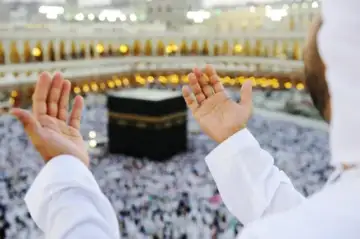
Most pilgrims arrive in Saudi Arabia days or weeks in advance to complete preparations and adjust to the environment before the main rituals begin.
Best time to visit Mecca for pilgrimage and travel
The timing of Hajj is fixed and cannot be changed, as it is tied to Dhul Hijjah.
However, for those planning a spiritual visit outside Hajj, known as Umrah, Mecca can be visited throughout the year.
Many travellers prefer cooler months such as November to February, when temperatures are more comfortable for walking and outdoor rituals.
Despite this, Mecca remains busy year-round due to religious tourism, with peak crowds during Hajj season.
Key rituals of Hajj explained step by step
The Hajj pilgrimage follows a set sequence of rituals carried out over several days. Each step has historical and spiritual meaning.
The journey begins with entering the state of Ihram, where pilgrims wear simple white clothing and follow strict rules, focusing entirely on worship and discipline.
Next is Tawaf at Masjid al-Haram, where pilgrims circle the Kaaba seven times in a counter-clockwise direction as an act of devotion and unity.
This is followed by Sa'i, where pilgrims walk between the hills of Safa and Marwa, remembering the struggle of Hajar in search of water for her son.
A major highlight is the Day of Arafat, where pilgrims gather at Mount Arafat. It is considered the most important day of Hajj, spent in prayer, reflection, and seeking forgiveness.
After Arafat, pilgrims travel to Muzdalifah, where they spend the night under the open sky, praying and collecting pebbles for the next ritual.
They then move to Mina, where the ritual of stoning the pillars is performed, symbolising rejection of evil and temptation.
Also Read:When will Eid Al-Fitr be celebrated in 2026? Everything you need to know
The pilgrimage ends with a final farewell Tawaf at the Grand Mosque before leaving Mecca.
Masjid al-Haram and the Kaaba: The spiritual centre of Islam
Masjid al-Haram is the most sacred mosque in Islam and surrounds the Kaaba.
The Kaaba is a cube-shaped structure that Muslims face during daily prayers from anywhere in the world.
During Hajj, millions of pilgrims perform Tawaf around the Kaaba in a continuous circular movement. This ritual reflects unity, equality, and devotion, as all pilgrims move together around a single focal point of worship.
Mount Arafat: The Mountain of Mercy
Mount Arafat, also known as the Mountain of Mercy, is located around 20 kilometres from Mecca.
It is believed to be the site where Prophet Muhammad delivered his final sermon.
On the Day of Arafat, pilgrims gather in large numbers on the plains surrounding the mountain. The day is spent in prayer and deep reflection, and it is regarded as the spiritual peak of Hajj.
Without this stop, the pilgrimage is not considered complete.
Jabal al-Noor and the Cave of Hira
Jabal al-Noor, or the Mountain of Light, holds great historical importance in Islam.
At its summit lies the Cave of Hira, where Prophet Muhammad is believed to have received the first revelations of the Quran.
Although it is not part of the official Hajj rituals, many pilgrims choose to climb the mountain for its spiritual and historical significance.
The climb is steep and physically demanding, but it is often described as a deeply reflective experience.
Mina and Muzdalifah: Key stops during the pilgrimage journey
Mina is a large tent city where pilgrims stay during parts of Hajj. It becomes one of the largest temporary settlements in the world during the pilgrimage period.
Between Mina and Arafat lies Muzdalifah, an open valley where pilgrims stop after leaving Arafat.
Here, they spend the night in prayer and collect small pebbles used later in the ritual of stoning the pillars at Mina.
Both locations play an essential role in the structured movement of the Hajj journey.
Why Hajj is considered a life-changing experience
Hajj is not only a physical journey but also a deeply emotional and spiritual one.
It is seen as a moment of renewal, where pilgrims seek forgiveness and return with a sense of spiritual cleansing and discipline.
The pilgrimage also reinforces equality, as people from across the world stand together without distinctions of wealth, nationality, or status.