
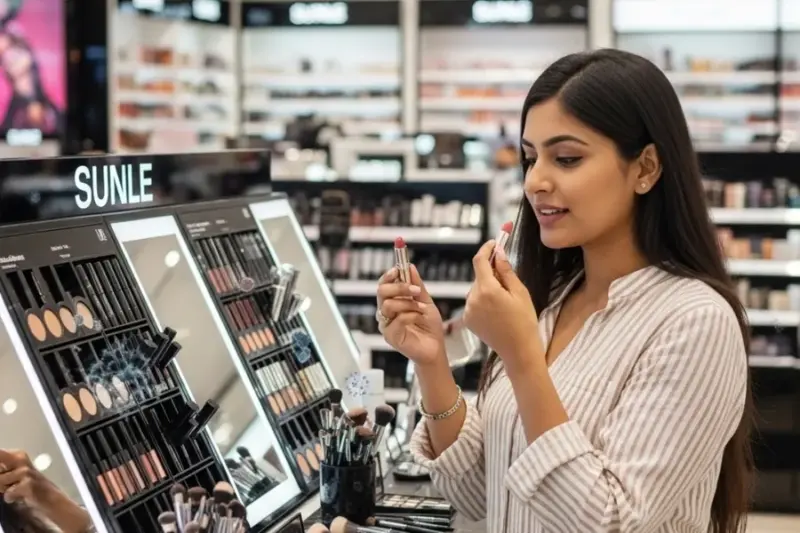

You spot the perfect lipstick at a mall counter. The shade looks stunning, the tester is right there, and without a second thought, you swipe it on to "just check."
It feels harmless-until you realise that dozens of strangers may have done the exact same thing before you. What looks like a quick beauty trial could actually be your first contact with bacteria or viruses you never signed up for.
Trying makeup testers at malls may feel routine, but experts warn that this common habit carries serious health risks. From viral infections to harmful bacteria, shared cosmetics can become a breeding ground for pathogens due to repeated use by multiple people.
Why makeup testers are risky
Public makeup testers are used by dozens, sometimes hundreds, of people daily. Even if they appear clean, they can harbour microorganisms transferred through direct contact. Dermatologists and health experts caution that these products can act like a "petri dish", allowing germs to thrive and spread easily.
Studies have found that a large percentage of used cosmetic products are contaminated with bacteria such as E. coli and Staphylococcus, both of which can lead to infections. These microbes are often introduced through unwashed hands or direct skin contact.
Viral infections linked to testers
One of the most concerning risks is the transmission of viruses. The herpes simplex virus (HSV-1), which causes cold sores, can survive on moist surfaces like lipsticks or glosses long enough to infect another person. Even individuals without visible symptoms can carry and spread the virus.
Eye infections such as conjunctivitis can also spread through shared mascara or eyeliner testers. Since these products come into close contact with sensitive areas, the risk of infection increases significantly.
The problem with shared usage
Improper use of testers worsens the issue. Many users either skip disposable applicators or use them incorrectly. "Double-dipping" - reusing an applicator after it touches the skin - contaminates the entire product.
Additionally, testers are often exposed to heat and light for long hours, which can degrade preservatives. This not only reduces product quality but also allows bacteria to multiply more easily.
Common bacteria found in testers
- Staphylococcus: Can cause skin infections and eye styes
- E. coli: Indicates contamination from poor hygiene and can lead to serious illness
- Pseudomonas: Known to cause eye and skin infections
These pathogens can remain active on cosmetic surfaces, increasing the chances of cross-contamination.
How to stay safe while shopping
Consumers do not need to avoid beauty shopping altogether but should take precautions:
- Avoid direct application: Never apply testers to your lips, eyes, or face
- Use hand swatches: Test products on the back of your hand and sanitise immediately
- Ask for sanitisation: Request staff to clean the product surface or provide disposable tools
- Look for sealed samples: Opt for single-use sachets whenever available
- Carry sanitiser: Clean your hands before and after testing products
Why this matters
While makeup testers offer convenience, the health risks associated with them can outweigh the benefits. Infections caused by contaminated products can require medical treatment and, in some cases, lead to long-term issues.
Experts emphasise that maintaining personal hygiene and being cautious with shared products is essential. What appears to be a free and harmless trial could come at a significant cost to your health.
(Disclaimer: This article is for informational purposes only and is based on expert opinions, studies, and reported cases. It does not constitute medical advice. Readers are advised to consult a qualified healthcare professional for any health concerns or before making decisions related to personal hygiene or infection risks.)