





The nature of conflicts has fundamentally evolved, across the globe. Modern warfare extends far beyond kinetic battlefields and conventional weaponry, shifting decisively toward psychological domains.
Today, adversaries increasingly weaponize digital propaganda, leaked personal data, and historical trauma. By targeting collective cognition and instilling systemic fear, psychological warfare aims to destabilize societies from within without firing a single shot. This is exactly what is happening in the 'Kashmir valley'.
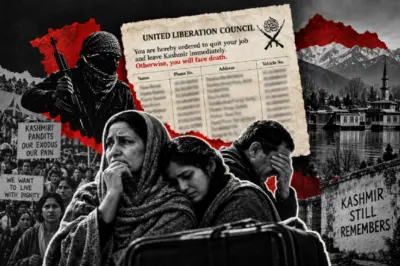
There is a pattern to how terror works in Kashmir, and anyone who lived through the early 1990s will recognise it the moment it resurfaces. Over the past month, a letter has been doing the rounds on social media. It carries the name of the United Liberation Council, a front believed to belong to Lashkar-e-Taiba. It lists names, phone numbers, home addresses and vehicle registration numbers. All belong to Kashmiri Pandit employees who came back under the Prime Minister's rehabilitation package. The order is simple. Quit the job. Or face death. Reports say this is the fifth such letter in five weeks. Thousands of Pandit families are on edge again.
Read the letter for what it is, and not merely for what it says. It is psychological warfare, and it is aimed squarely at a wound that has never healed.
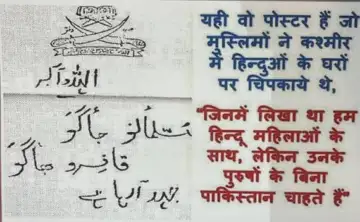
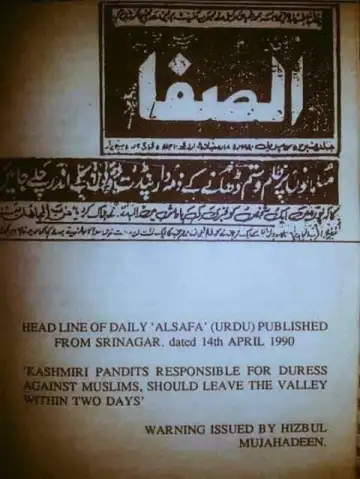
Anyone who grew up in Srinagar in 1990 remembers the slogans broadcast from the mosques after dark Raliv, Chaliv ya Galiv and Asi gasi Kashir, Batav rostuy batnyavaan saan the choice offered to the Pandits: convert, flee, or die, without their women. Those slogans did not just empty out a community however they left a trauma that thirty-five years of exile has not resolved. What is happening now is a calculated attempt to reopen that wound rather than let it heal because for the first time since 1990, it has actually begun to heal.
And it had started to heal. After the abrogation of Article 370, something changed on the ground. This comes at a time when the government has launched a rehabilitation programme for Kashmiri Hindus. The government has done two things to bring Pandits back to the Valley. After the abrogation of Article 370, many Kashmiri Pandits have started returning to reclaim their land. Under the government's initiative, nearly 6,000 Kashmiri Pandits have been appointed to various government jobs. The government has also built homes for close to 600 Kashmiri Pandits who have come to live in the Valley. This is the main issue for the terrorists. They saw that the fear was fading.
The timing is not incidental either.When the US Ambassador visited Kashmir and articulated a stance that effectively validated ground realities, the diplomatic tremor was felt most acutely in Islamabad. Predictably rattled by its shrinking international leverage, Pakistan's strategic apparatus pivoted to its default reflex: recalibrating terror vectors.
Within days, Lashkar-e-Taiba's Hafiz Talha Saeed released a recorded threat promising "jihad in Delhi" while invoking medieval imperial legacies. The sequence of events is a textbook display of asymmetric posture. Whenever Pakistan finds itself cornered, isolated, or ignored on the global stage, its handlers immediately attempt to destabilize the Valley.
For an establishment desperate to prove that Kashmir remains an open dispute, returning Kashmiri Pandits represent an uncomfortable reality, a visible, undeniable symbol of normalization that dismantles their narrative. Naturally, that makes these returnees the immediate target of their psychological warfare.
The most critical question exposed by this data leak is administrative: how did detailed, non-public personnel records—including vehicle numbers and private contact details—reach terror fronts operating on encrypted platforms?
The answer lies in the persistent, deeply embedded ecosystem inside the regional administrative machinery. While kinetic operations by security forces have systematically eliminated active terrorist commanders, the non-kinetic infrastructure—the "over-ground workers" and ideological sympathizers inside government offices—continues to function like sleeper cells.
This internal subversion validates the long-held strategy summarized by radical elements: "Sarkar unki hai, par system hamara hai" (The government may be theirs, but the system remains ours). Whether operating out of fear or ideological alignment, elements within the administrative apparatus have acted as facilitators for terror outfits. From Pathankot and Uri to recent incidents in Pahalgam, local logistical support networks have consistently proven to be the backbone of external terror operations.
This ecosystem also deploys psychological instruments to maintain local polarization. Recent public letters from convicted Yasin Malik ,engineered to evoke emotional resonance among the local youth, are crafted to destabilize the situation whenever legal accountability nears its logical conclusion. The objective remains singular: maintain an atmosphere of fear to prevent integration.
They want to keep the fear alive.That is why they try such acts. In 2022, Rahul Bhat was killed inside his office. They are trying to create fear. They are nudging the Kashmiri Pandits to leave again. The current letters follow the same logic and manufacture enough fear, and the demographic gains of the past few years reverse themselves without a single additional bullet being fired.
The long-term resolution to the Kashmir challenge requires systematically dismantling the cultural and demographic alienation engineered over three decades of conflict. For years, generations of youth in the Valley were subjected to a targeted, selective narrative explicitly designed to sever their connection with Kashmir's deep indigenous Hindu heritage—a cultural engineering effort strikingly reminiscent of how Tibet's younger generations were systematically separated from their historical and civilizational identity. Restoring the physical, cultural, and demographic presence of Kashmiri Pandits is not merely a matter of administrative justice for a displaced community; it is an absolute necessity for reconnecting the Valley with its civilizational roots and breaking the ideological hold of extremist narratives.
Remember, Barkha Dutt's historical characterization of Kashmiri Pandits as "privileged elites" who "monopolised government jobs" rationalized systemic violence through a false narrative of economic grievance. Neutralizing this persistent psychological offensive demands an uncompromising counter-strategy anchored in three immediate structural imperatives.
This is why the return of Pandit families to the Valley is not simply a rehabilitation scheme or a welfare gesture.Because ultimately, terror thrives on fear, but nations endure on resolve. Islamabad's handlers can leak lists and engineer psychological threats, but they cannot stop Kashmir's civilizational clock from resetting. The return of Kashmiri Pandits isn't just rehabilitation, it is the definitive declaration that the Valley's destiny will no longer be dictated by terror