
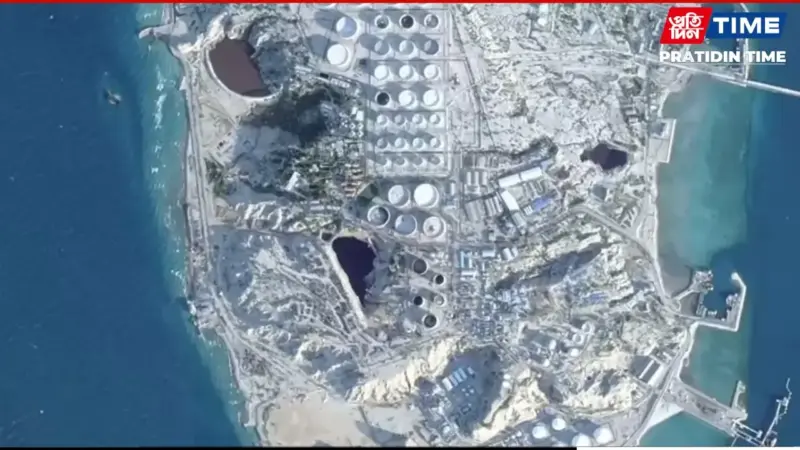

Iran's critical oil hub, Kharg Island, came under attack on Tuesday, according to Iranian outlet Mehr News, marking a sharp escalation in the ongoing conflict between the United States and Iran.
The strategically vital island, which handles the bulk of Tehran’s oil exports, was reportedly hit by multiple strikes, placing it at the centre of a month-long confrontation that has already unsettled global energy markets.
Situated in the Persian Gulf, Kharg Island is responsible for processing nearly 90 per cent of Iran’s oil exports, making it indispensable to the country’s energy lifeline. Much of Iran’s coastline lacks the depth required for large oil tankers, leaving the island as its primary export terminal.
Its proximity to US military bases in Kuwait and Saudi Arabia further heightens its vulnerability during military escalation. Analysts warn that any prolonged disruption at Kharg could severely impact Iran’s oil revenues while triggering volatility in global fuel prices.
The conflict has already strained energy markets, particularly after Iran moved to shut the Strait of Hormuz, a key maritime corridor through which a significant portion of the world’s oil supply passes.
US President Donald Trump had earlier indicated that Kharg Island could be a potential target. In remarks to the Financial Times, he said, “Maybe we take Kharg Island, maybe we don’t. We have a lot of options,” underscoring Washington’s strategic calculations.
A strike on the island is widely viewed as an effort to cripple Iran’s oil exports and weaken its leverage over the Strait of Hormuz, thereby increasing pressure on Tehran amid stalled negotiations.
Tensions escalated further after Trump extended a deadline for Iran to reach an agreement or reopen the Strait of Hormuz, shifting it from Monday to Tuesday. The US president warned of severe consequences if Tehran failed to comply, stating that “hell will reign down” without a deal.
The deadline had already been revised multiple times since March 23, reflecting fluctuating signals from Washington that alternated between threats and optimism about negotiations.
Iran, however, rejected a 45-day ceasefire proposal, insisting on a permanent end to the conflict. The country’s state-run IRNA news agency confirmed the rejection, signalling a hardened stance.
In response to escalating threats, Iranian officials have called on citizens to mobilise in defence of key infrastructure, including power plants. The rhetoric intensified as Trump warned of targeting Iran’s critical infrastructure, including bridges and energy facilities, if maritime traffic through the strait is not restored.
Iran’s president stated that millions, including himself, have volunteered to defend the country, reflecting the growing domestic mobilisation as tensions with the United States reach a critical point.
Iran Urges Youth to Form Human Chains to Protect Power Sites Before US Deadline