
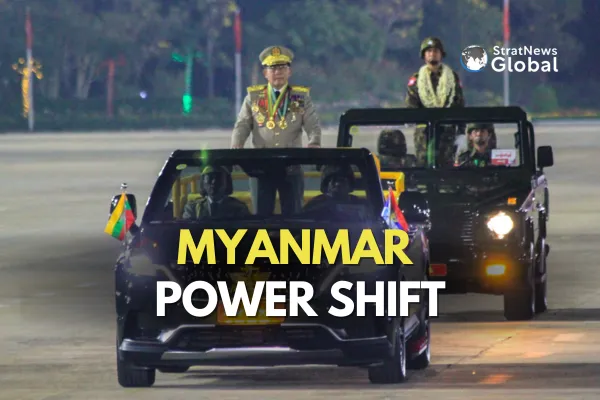

Myanmar's parliament is set to hold a crucial vote to elect a new president, with junta leader Min Aung Hlaing emerging as a key contender in a move that could further consolidate military control over the country.
House Speaker Aung Lin Dwe announced that a bicameral vote will take place on Friday, bringing together lawmakers from both chambers, including military-appointed representatives.
Min Aung Hlaing, 69, stepped down earlier this week as Myanmar's top military commander after 15 years in the role. His resignation came just days before he was nominated as a vice presidential candidate by members of the lower house.
He will compete alongside two other candidates nominated by the upper house and military-aligned lawmakers. Under Myanmar's system, the president is selected from among three vice presidential nominees through a joint parliamentary vote.
The development comes against the backdrop of the Myanmar coup 2021, led by Min Aung Hlaing, which ousted the elected government of Aung San Suu Kyi.
The coup plunged the country into a prolonged civil conflict, with widespread violence, economic disruption, and international isolation continuing to shape Myanmar's political landscape.
The upcoming vote follows elections held between December and January, which were won by the military-backed Union Solidarity and Development Party.
However, the elections have been widely criticised by the United Nations and several Western governments, which described them as lacking credibility and failing to meet democratic standards.
If elected president, Min Aung Hlaing would effectively transition from military leadership to a civilian political role while maintaining significant influence over the country's governance.
Analysts say the move could formalise the military's grip on power under a constitutional framework, even as conflict and political opposition persist across Myanmar.
The parliamentary vote is expected to be closely watched both domestically and internationally, as it may signal the next phase of Myanmar's political trajectory.
For many observers, the outcome will determine whether the country moves toward stabilisation or deeper entrenchment of military rule.
(with inputs from Reuters)