
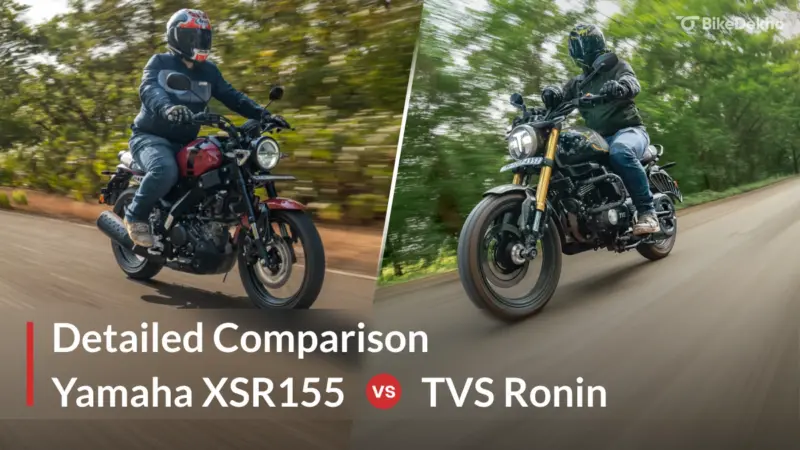

Making a choice between the XSR 155 and the Ronin will be very easy for you
Both the Yamaha XSR 155 and TVS Ronin are neo-retro bikes with price tags that start under Rs 1.5 lakh.
And, that is where the similarities pretty much end; because from there on, almost everything else is completely different. So if you've been confused between these two, we're here to help:
Price & Variants
Yamaha XSR 155 | TVS Ronin | ||
Variant | Ex-showroom Price | Variant | Ex-showroom Price |
Metallic Blue | Rs 1,49,990 | Lightning Black (Base) | Rs 1,25,690 |
Vivid Red | Rs 1,52,990 | Magma Red (Base) | Rs 1,27,990 |
Metallic Grey | Rs 1,56,990 | Agonda Edition | Rs 1,30,990 |
Greyish Green Metallic | Rs 1,58,990 | Glacier Silver (Mid) | Rs 1,48,040 |
Metallic Black | Rs 1,58,990 | Charcoal Ember (Mid) | Rs 1,49,340 |
Nimbus Grey (Top) | Rs 1,60,140 | ||
Midnight Blue (Top) | Rs 1,60,140 |
For Rs 1.25 lakh, the TVS Ronin seems like fantastic value for money. TVS has priced the bike very competitively so it's understandable if budget-conscious people are drawn to it.
The XSR 155 is also priced really well, especially for a retro bike that's also sporty. While it may not be as feature-packed as the Ronin, it balances out by offering engaging performance.
Dimensions & Design
Specifications | Yamaha XSR 155 | TVS Ronin | Difference |
Wheelbase | 1325mm | 1357mm | -32mm |
Kerb Weight | 137kg | 160kg | -23kg |
Ground Clearance | 170mm | 181mm | -11mm |
Seat Height | 810mm | 795mm | +15mm |
Fuel Tank | 10 litres | 14 litres | -4 litres |
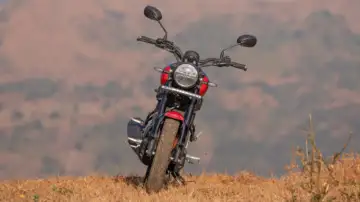
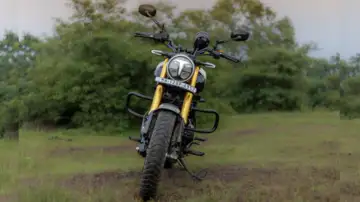
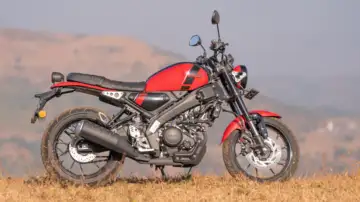
Both the Yamaha and Ronin are beginner-friendly bikes with their low seat heights, and slim profiles. That said, the XSR is almost 25kg lighter than the Ronin and more compact of the two.
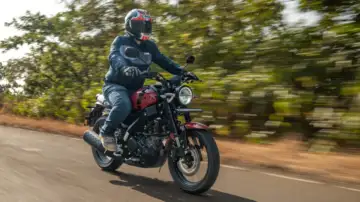
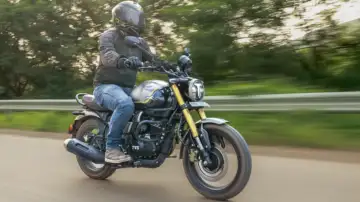
On the Ronin you sit more upright with your hands and legs spread out, so you have a reasonable amount of space to move around and sit comfortably. The XSR is tight and compact, and you are leaned forward with your legs folded up. The sportier riding posture is definitely more engaging but taller riders will wish they had more room.
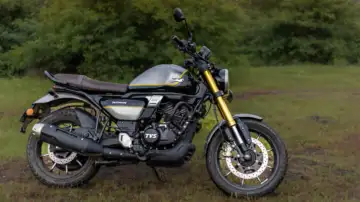
We've not really been fans of how the Ronin looks. It's not sure if it wants to be a cruiser, scrambler, or a roadster as it has certain elements of all the three. But then again, TVS feels that 'uniqueness' is a selling point for the Ronin. The XSR 155, meanwhile, wants to be a neo-retro bike and is exactly that. The round headlight and console give it the retro feel, while the 17-inch wheels and R15-derived engine ensure you remember its sportiness.
Features & Safety
Key Features | |
Yamaha XSR 155 | TVS Ronin |
|
|
While the XSR 155 and Ronin both have lots of important, useable features; we wish the TVS bike had dual-channel ABS as standard.
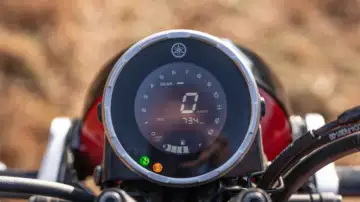
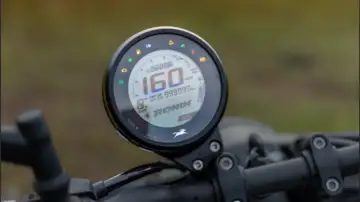
Apart from these things though, both bikes won't leave you wanting for more. Both have round LCD consoles with Bluetooth connectivity, but the Ronin comes with a whole bunch of features including trip analysis, voice assist, turn-by-turn navigation - among others.
- The Ronin also comes with low rpm assist, ABS modes, silent starter, adjustable brake and clutch levers - depending on the variant.
Engines
Specifications | Yamaha XSR 155 | TVS Ronin |
Engine | 155cc, liquid-cooled, single-cylinder | 225.9cc, air/oil-cooled, single-cylinder |
Power | 18.4PS at 10,000rpm | 20.4PS at 7,750rpm |
Torque | 14.2Nm at 7,500pm | 19.93Nm at 3,750rpm |
Gearbox | 6-speed | 5-speed |
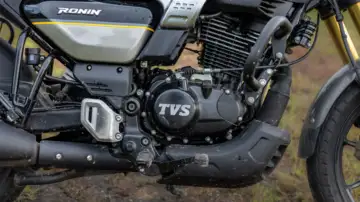
The Ronin makes its peak torque at exactly half the revs compared to the XSR. The TVS bike has a lot of grunt right off idle and riding it in the city is very easy. You can just slot it in 2nd or 3rd gear and ride it around town. Up to 5000rpm it feels grunty, after which it slowly starts dying out, making it clear that it was made for easy commuting rather than high speeds.
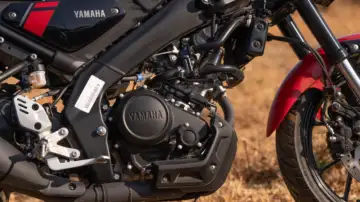
The XSR 155, on the other hand, only starts coming alive after about 7000rpm. Its R15-derived engine loves being revved out and if you enjoy riding your bikes hard, it is an absolute hoot. The XSR's party trick is the variable valve actuation. It allows its engine to have just enough power at low speeds while not compromising on its performance at higher revs.
Verdict
Choosing between the Yamaha XSR 155 and TVS Ronin is simple: if you want a premium neo-retro commuter which will get you from point A to point B comfortably without much fuss, and also loaded with fancy features, the Ronin might impress you more.
But if you want your retro bike to have a bit of excitement, the XSR 155 will delight you. It has everything we love about the Yamaha R15 V4 and Yamaha MT-15 V2, but is wrapped up in beautiful neo-retro bodywork, and also a forgiving riding posture.
XSR 155 Vs Rivals:
When comparing the XSR 155 and Hunter 350, the Yamaha feels more sporty and engaging to ride, while the Royal Enfield bike is better suited to a relaxed riding style.
The XSR looks better, feels more fun to ride, and isn't too far behind in mileage when compared to the FZ-X.
Between the XSR and MT-15, the choice mainly comes down to styling preference.
The R15 delivers a proper sportbike experience and feels more thrilling to ride than the XSR.
The Honda CB150R also follows a neo-retro design philosophy, but since it is not on sale in India, the Yamaha becomes the more practical option.
When compared to the TVS Apache RTR 160 4V, the Yamaha XSR offers a higher-revving engine and more exciting top-end performance.
The Honda CB190SS has a stronger retro appeal, but since it is not available in India, the XSR 155 stands out as the better option.