




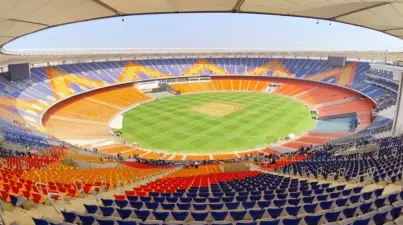

Cricket stands as a triumphant combination of celebration, tradition, and national pride throughout the entire nation of India. The vast number of cricket fans, combined with the continuous production of talent nationwide, has enabled India to create an excellent sports foundation through iconic stadiums representing the world's most impressive stadium designs. But size isn't everything.
The article investigates the top 5 small cricket stadiums based on seating capacity in India, while comparing them with the smallest cricket ground in the world, and which is the smallest cricket stadium in India.
Overview of Cricket Stadiums in India
Image: Telegraph IndiaIndia has one of the largest and most diverse sets of cricket stadiums in the world, with the passion for the sport reflected in the sheer variety of venues. With over 50 venues at the international level, India not only hosts bilateral series but also the ICC World Cup and both domestic and international Twenty20 cricket through the Indian Premier League (IPL).
The venues are staged in quite a wide range of capacities, history, and ambience, contributing to vastly unique experiences for players and spectators alike.
Narendra Modi Stadium in Ahmedabad is currently the largest cricket stadium in the world, with 132,000 seats. This ultra-modern stadium has hosted high-profile IPL matches, World Cup matches, and has quickly become a favourite for day-night tests.
Larger Indian stadiums organize international high-stakes games, whereas small facilities play an important role in fulfilling domestic tournament requirements. The domestic tournaments, Ranji Trophy and Duleep Trophy, and Syed Mushtaq Ali Trophy, depend on them for their existence. Some stadiums serve as hosts for T20I international matches and ODIs, even though they have limited seating because of their updated facilities.
Top 10 Biggest Cricket Stadiums in India: A Comprehensive Review
What Makes a Cricket Stadium 'Small'?
 Image: Getty
The seating capacity serves as the primary determining factor of classification for small cricket stadiums. Cricket stadiums create more diversity in spectator areas than in the standard field dimensions that other sports utilize.
In India, a cricket stadium with a seating capacity of less than 30,000 is typically classified as “small.” Other characteristics that define a small stadium include:
- Closer boundary lines (helping batsmen score easily)
- Smaller spectator stands or lower tiers
- Compact player facilities and pavilions
- Fewer parking spaces and public transport access
Despite their modest sizes, these stadiums offer high-intensity cricket, crowd engagement, and often serve as breeding grounds for emerging cricketers.
Top 5 Smallest Cricket Stadiums in India by Seating Capacity
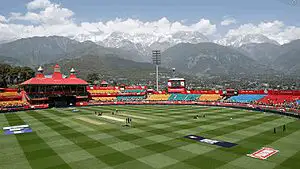 Image: Times Now
Rank | Stadium Name | City | Capacity |
1 | Captain Roop Singh Stadium | Gwalior, Madhya Pradesh | 18,000 |
2 | Dharamshala Cricket Stadium | Dharamshala, Himachal Pradesh | 23,000 |
3 | Barabati Stadium | Cuttack, Odisha | 26,000 |
4 | Saurashtra Cricket Association Stadium | Rajkot, Gujarat | 28,000 |
5 | Holkar Cricket Stadium | Indore, Madhya Pradesh | 38,000 |
Here are five of the smallest cricket stadiums in India, ranked by their seating capacities:
Captain Roop Singh Stadium-Gwalior, Madhya Pradesh
- Seating Capacity: ~18,000
- Established: 1978
- Notable Moment: Sachin Tendulkar's historic double century in ODIs (2010)
- Home Team: Madhya Pradesh
This stadium is the smallest cricket ground in the world by capacity. While it rarely hosts high-profile matches today, its name lives on in cricketing history. Its small size gives it a unique, cozy feel, and the crowd sits quite close to the action.
Dharamshala Cricket Stadium (HPCA Stadium)-Himachal Pradesh
- Seating Capacity: ~23,000
- Established: 2003
- Home Team: Himachal Pradesh, Punjab Kings
Situated at an altitude of nearly 1,500 meters, this is arguably the most scenic cricket stadium in India. Nestled in the lap of the Dhauladhar mountain range, the HPCA Stadium is not just small but incredibly picturesque. Despite its size, it has hosted international matches, thanks to excellent infrastructure and a passionate local fan base.
Barabati Stadium-Cuttack, Odisha
- Seating Capacity: ~26,000
- Established: 1958
- Home Team: Odisha
One of the oldest cricket stadiums in the country, Barabati Stadium, combines history with modern functionality. With a seating capacity of 30,000, it still manages to host occasional international matches, particularly ODIs and T20s.
Saurashtra Cricket Association Stadium-Rajkot, Gujarat
- Seating Capacity: ~28,000
- Established: 2008
- Home Team: Saurashtra
Though relatively new, this stadium in Rajkot has rapidly grown in prominence. Its modern amenities and quick pitch make it a popular venue for both domestic and international cricket. Its smaller capacity is more than compensated for by a vibrant atmosphere and passionate fans.
Holkar Cricket Stadium-Indore, Madhya Pradesh
- Seating Capacity: ~30,000
- Established: 1990
- Home Team: Madhya Pradesh
Holkar Stadium regularly hosts international matches and IPL games. Known for its short boundaries and batting-friendly pitch, it delivers high-scoring thrillers. Despite being at the upper end of our “small” classification, it still has one of the lowest capacities among India’s international venues.
Lesser known in stature but still significant to support the sport’s development in smaller cities in India and developing players who may not have the opportunities of those in other leagues.
Indoor Cricket Stadiums: The Ultimate Game-Changer for Players and Fans
Comparing India's Smallest Stadiums to the World
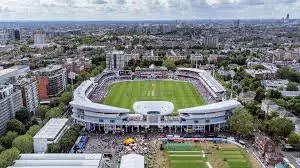 Image: Populous
1. Lord's Cricket Ground, London, UK (~30,000):
While Lord's is renowned as “the home of cricket” and steeped in history, it has a relatively small seating capacity compared with other international grounds. It is a global icon in terms of prestige, even though its capacity is similar to that of India's smaller venues. Despite its size, Lord's hosts major international matches and prestigious events like the Ashes, making it a cultural landmark in cricket.
2. The Gabba, Brisbane, Australia (~42,000):
Compared to India's smaller venues, The Gabba is slightly larger, but it also holds historical significance as a testing ground for Australia's formidable fast bowlers. However, its capacity is still lower than that of large Australian stadiums like the Melbourne Cricket Ground (MCG) or the Sydney Cricket Ground (SCG).
3. Newlands Cricket Ground, Cape Town, South Africa (~25,000):
Newlands is another famous small stadium, known for its breathtaking backdrop of Table Mountain. It hosts international matches, including Tests and T20Is, and despite its smaller capacity, is often regarded as one of the most picturesque stadiums in the world.
4. Eden Park, Auckland, New Zealand (~25,000):
Eden Park is one of the smallest Test cricket stadiums globally but has hosted major events, including World Cup finals. Despite its small size, the stadium is famous for its compact nature and the intense atmosphere it creates, particularly during high-stakes games.
5. Queen's Park Oval, Port of Spain, Trinidad (~20,000):
This stadium is a key venue for West Indies cricket. It is smaller than most international stadiums but plays a vital role in hosting regional and international games. Its capacity is similar to India's smaller venues, and it has a rich cricketing tradition despite its size.
To conclude, while India’s smallest stadiums may not be functional in physical size compared to the world’s giants, they are hugely important for the sake of ticketing and growing cricket socially, creating vibrant atmospheres, and engaging with regional cricket growth expertise.
Unique Features of Small Cricket Stadiums in India
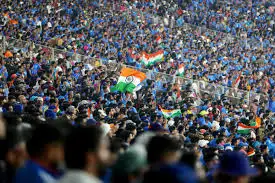 Image: HT
Small cricket stadiums in India may lack size, but they are rich in:
- Intimate Atmosphere: Fans are closer to the action, creating a high-energy, intimate environment.
- Easier Crowd Management: Smaller crowds allow for better security, comfort, and facilities management.
- Local Talent Development: These stadiums often serve as training grounds for state teams and young cricketers.
- Cultural Significance: Many have deep roots in local cricketing history and have hosted legendary players.
- Scenic Locations: Venues like HPCA Stadium in Dharamshala and stadiums in hill stations offer a unique viewing experience that larger, urban stadiums can’t match.
The Future of Small Cricket Stadiums in India's Domestic and IPL Matches
 Image: HT
With the growth of cricket in India, especially through the IPL, small stadiums continue to be pivotal. The BCCI and state cricket boards are investing in upgrading these facilities. Key future trends include:
- Increased Use in IPL: IPL franchises are exploring new home bases in smaller cities to tap into untapped fan bases.
- Upgraded Infrastructure: Modernization of stands, digital scoreboards, better drainage systems, and LED lighting are on the rise.
- Promotion of Domestic Talent: Hosting domestic tournaments like the Ranji Trophy or Syed Mushtaq Ali Trophy in smaller stadiums boosts regional cricket.
- Eco-Friendly Initiatives: Many new upgrades focus on sustainability, such as solar panels and water recycling systems.
- Fan Engagement: Smaller venues are leveraging digital platforms to provide immersive fan experiences, rivalling larger stadiums.
Conclusion
Such small cricket stadiums play a fundamental role in sustaining India’s cricketing framework, while bigger venues gain media attention. Domestic tournaments, along with the development of local players, take place on these local cricket grounds, which generate unique sporting features that enhance the cricket experience.
The HPCA Stadium in Dharamshala, along with the Captain Roop Singh Stadium in Gwalior, has become a legendary venue in terms of Indian cricket history. The growth of cricket as a sport requires these minor cricket facilities to grow in importance because they promote grassroots cricket development and fan access to all parts of India.
Despite not achieving top positions in terms of minimum size or seating capacity, the Indian cricket venues maintain their greatness through their enthusiastic fan base and active progress toward modern stadium developments.
Small cricket stadiums in India will permanently become fundamental guides for national stadium development.
FAQs
Can small cricket stadiums in India host international matches?
The international regulatory benchmarks are satisfied by numerous Indian small cricket stadiums, which have actually staged ODIs and T20Is. The prestigious cricket matches take place at both the Holkar Stadium in Indore and the HPCA Stadium in Dharamshala.
Do small stadiums have the same facilities as larger ones?
Small cricket stadiums feature advanced facilities that include modern dressing areas along with media facilities, as well as LED lighting and digital scoreboards. The recent stadium renovation projects have made these facilities comparable to or better than the specific features of bigger stadiums.
Are shorter boundaries a disadvantage to bowlers?
Shorter boundaries in small stadiums do make life tougher for bowlers, particularly in T20 formats, but they also promote innovative strategies and skill development. Bowlers often use variations and clever field settings to counter the batting-friendly conditions.
Why are IPL matches played in smaller venues?
The Indian Premier League strategically schedules games in smaller cities to expand its fan base and promote cricket in emerging markets. These stadiums offer a more intimate fan experience and generate strong local engagement.
Can small stadiums be expanded in the future?
Indian cricket stadiums with small capacities can become larger through suitable land acquisition, while receiving financial support and adherence to legal stadium guidelines. Several venues have already undergone renovations to increase capacity and improve facilities.
Top 13 Best Cricket Bats in India | Buy Today & Hit It Big