





As the hours tick down to the announcement of the election results, Kerala's political landscape is once again circling back to an old and familiar question-who will hold power?
Alongside that, another parallel debate has gained momentum within the delicate arithmetic of coalition politics: will the post of Deputy Chief Minister make a comeback?
While the 2026 exit polls suggest a closely contested election, most surveys indicate a slight edge for the UDF. Some projections even point to a clear advantage for the UDF, while others leave room for a hung assembly.
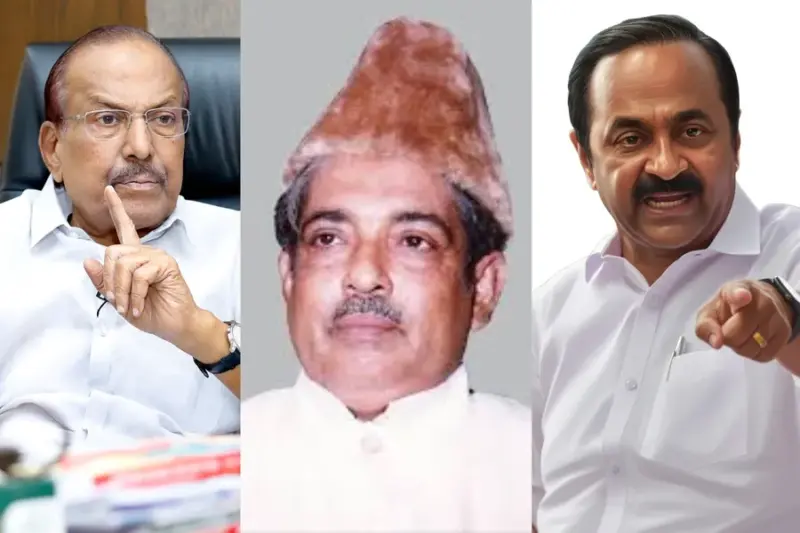
It is in this context that the idea of a Deputy Chief Minister has re-entered political conversation. Though not a constitutional necessity, it has historically functioned as a political mechanism to balance coalition power-sharing. Between the 1960s and 1987, the post existed only three times, held by Congress's R. Shankar, Indian Union Muslim League's C. H. Mohammed Koya, and K. Avukaderkutty Naha.
"During the time of Pattom A. Thanu Pillai as Chief Minister, R. Shankar served as Deputy Chief Minister. Later, in 1982, when K. Karunakaran was Chief Minister, C. H. Mohammed Koya became Deputy Chief Minister. After C. H. Mohammed Koya's death, K. Avukader Kutty Naha assumed the post. After that, the position of Deputy Chief Minister was never used. Later, when Oommen Chandy became Chief Minister, there was a possibility of Ramesh Chennithala becoming Deputy Chief Minister. But both the League and Kerala Congress raised competing claims, and eventually the post did not materialise," political analyst Adv. A. Jayashankar observed.
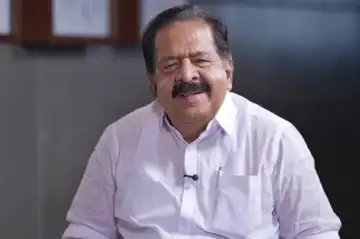
Today, the discussion has regained relevance due to the renewed electoral prospects of the UDF. Within coalition politics, the Indian Union Muslim League's stance has largely been one of cautious restraint-summarised as "we have the entitlement, but we are not demanding it." The recent remarks of Panakkad Syed Munavvarali Shihab Thangal reflect this same calibrated position.
"During the period of P. K. Kunhalikutty, the idea of a Deputy Chief Minister post itself gradually disappeared. Even when the League had around twenty MLAs, the demand did not go beyond a fifth ministerial post. Even in the present situation, no major leader has explicitly demanded the Deputy Chief Minister post. Personally, I do not believe the post carries significant political relevance. If Kunhalikutty comes back into active leadership, I do not see it as either a disaster or a necessity if he does not. The Muslim League is the third largest party in Kerala and the second largest within the UDF. Naturally, they will have influence in any ministry," social critic and author MN Karassery said.
He further added, "I am not a person who believes that a Deputy Chief Minister post is either essential or politically critical. Even if such a post exists or not, Kunhalikutty would still effectively remain the second most influential figure in a UDF ministry. He is likely to handle either the Industries portfolio or possibly Public Works."
Meanwhile, internal discussions within the Congress around the Chief Ministerial position have become equally significant. Ramesh Chennithala's long political experience and organisational legacy continue to make him a strong contender. On the other hand, VD Satheesan's performance as Leader of the Opposition and his appeal among younger voters have positioned him as a natural front-runner. KC Venugopal's organisational influence also remains a factor in the broader equation.
"If seniority is the criterion, then Ramesh Chennithala should be the next Chief Minister. He served as Kerala Pradesh Congress Committee President from 2005 to 2014, was Home and Vigilance Minister in the Oommen Chandy cabinet from 2014 to 2016, and was Leader of the Opposition from 2016 to 2021. He entered the Assembly from Haripad in 1982 at a very young age, and by 1986, at just thirty years old, he became a cabinet minister. He also served as a Member of Parliament. So, for him, what is left is the Chief Minister's post," Karassery noted.
At the same time, VD Satheesan is widely viewed today as the most natural "front-runner" for the Chief Minister's post within UDF camps.
"The general perception among both the political establishment and the public is that V. D. Satheesan has been the principal architect of this election campaign. He energised the youth, mobilised students, and took decisive political positions that proved effective. His interventions in issues such as the Nilambur constituency matter and the Rahul Mamkootathil episode are examples. There is a significant section of voters who decide based on issues rather than party loyalty. They are a decisive force in determining who governs. When the CPM denied a seat to VS Achuthanandan, it was public sentiment that ensured he was brought back into prominence and later considered for the Chief Minister's post. That same mass consciousness appears to be aligning with Satheesan this time," Karassery said.
Even so, the question of post-election power-sharing remains unresolved. The potential return of the Deputy Chief Minister post, the role of the League, and the leadership contest within the Congress all contribute to a highly complex political equation.
"Whether the League will demand the Deputy Chief Minister post if the UDF comes to power is uncertain. It is also possible that VD Satheesan becomes Chief Minister with Ramesh Chennithala as Deputy Chief Minister, or vice versa. That remains a possibility. I do not think KC Venugopal will have a direct role, since he is not in the Assembly and his work is primarily based in Delhi," Karassery observed.
At the centre of this unfolding scenario lies a more personal political question-would V. D. Satheesan be willing to accept a position other than the Chief Minister's chair? Is his political trajectory a one-directional ascent to the top post, or would coalition compulsions force him into a secondary role within a shared power structure?
"If Ramesh Chennithala becomes Chief Minister, V. D. Satheesan may either take a second position in the cabinet or choose not to join at all. But joining would be the wiser course, as Ramesh Chennithala himself did during the Oommen Chandy ministry. Initially, Chennithala was the KPCC President and had indicated he would join only if he received the Home portfolio. However, Oommen Chandy was not in a position to allocate that portfolio. If a Deputy Chief Minister post exists, it would likely be allocated to the League. In that case, Satheesan may be given the Finance portfolio," Adv. A. Jayashankar noted.